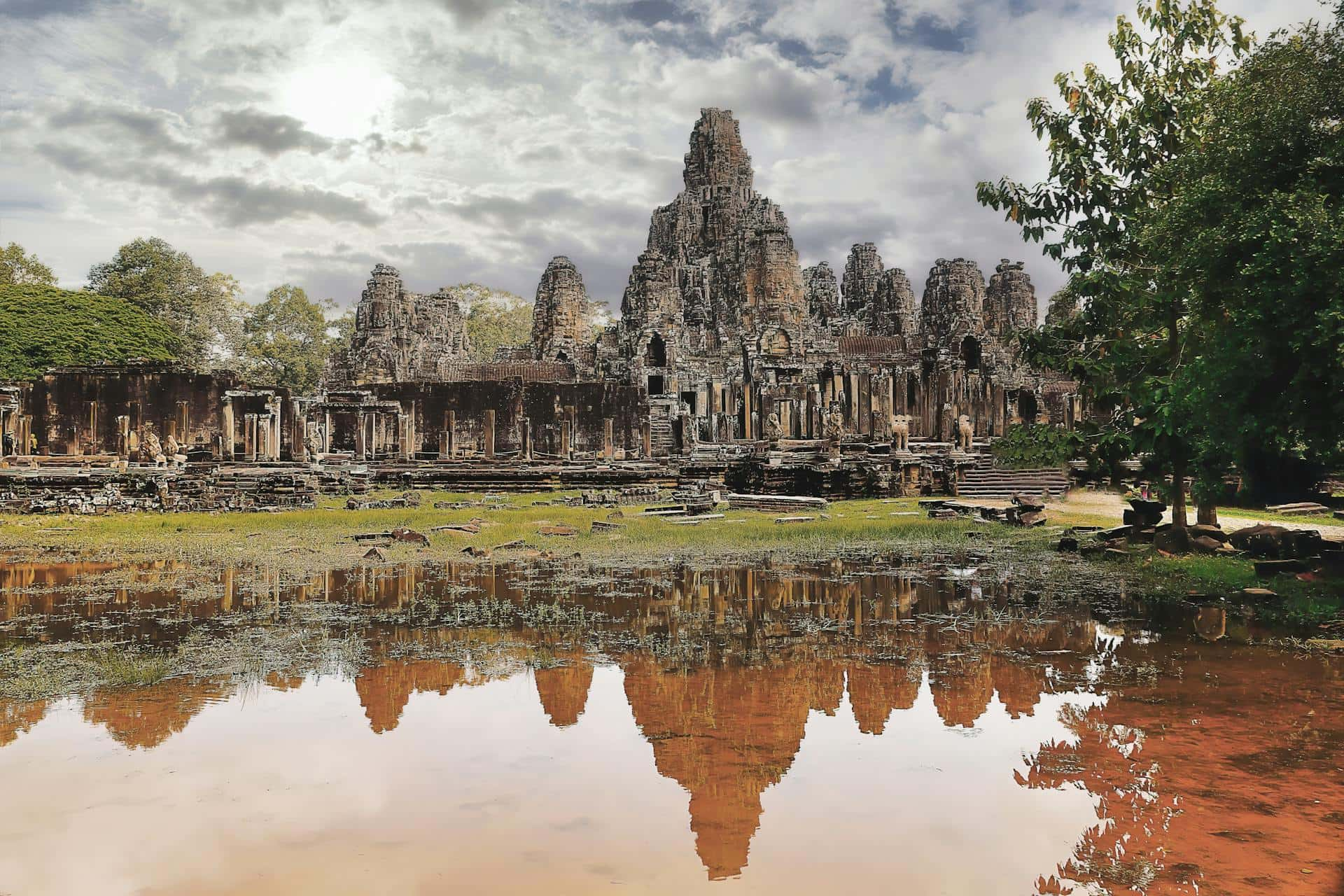
| Role | the main gateway to the Angkor temples |
|---|---|
| Airport | Siem Reap-Angkor International Airport (SAI) is 50 km east of the city and 40 km east of Angkor Wat, with a 3,600 m runway |
| Past | a leading Asian tourist draw until the late 1960s, when civil war kept visitors away |
| Angkor National Museum | opened 12 November 2007, eight galleries |
| Day trip | Phnom Kulen National Park, about 48 km away, has two waterfalls and Cambodia’s largest reclining Buddha |
Cambodia – Getting to know Siem Reap
Siem Reap is a city not only famous for the magnificent ruins of Angkor Wat – the largest religious monument in the world, but also for its countless structures built in unique colonial and Asian architectural styles. The most distinctive feature that you can feel when coming here is the sacred and ancient atmosphere that surrounds it.
At Siem Reap’s doorstep lies the expansive Tonle Sap Lake, Southeast Asia’s largest freshwater lake, and Phnom Kulen National Park, home to the sacred Phnom Kulen Mountain. Let’s join Absolute Asia Tours to know all the top things to do in Siem Reap, from the must-see temples, local insight to culture, tasting local delicacies and so much more.
Discover the Temples of Angkor
The so-called most attractive destination in Siem Reap, the Angkor temple complex, spans over 400 square kilometers and is surrounded by jungles and rice paddies. The crown jewel of the complex, Angkor Wat, holds deep cultural significance for Cambodia, even gracing the national flag if you notice.
Whether you’re visiting iconic sites like Angkor Wat or lesser-known temples, make sure to follow knowledgeable guides to ensure a full appreciation of their history and architecture. If you’re an early riser, the temples at sunrise are a photographer’s paradise, especially Angkor Wat and Bayon – bathing in golden light in dusk. With Absolute Asia Tours, you can tailor your Siem Reap tour to any of the Angkor temples at any time of the day based on your preferences!
Turning to one of the most mystical places in Angkor Wat complex – Ta Prohm, a temple enveloped by jungle vines and towering trees. As this is a famous setting for a Hollywood movie, you’ll witness mist rising through the ruins, creating an almost ethereal scenery and cinematic atmosphere. Another temple, Beng Mealea, offers an even more rugged, overgrown experience, where nature seems to have reclaimed the structure entirely. If you want to explore more mysterious temples in this huge complex, leave us a comment or contact us anytime!
Beyond Siem Reap’s Temples: Cultural and Natural Wonders
While the temples are the main attraction, Siem Reap offers plenty of other exciting things to do. For a taste of local life, you should definitely join a guided after-dark food tour through nearby villages. You’ll sample traditional Cambodian dishes like fish amok and Khmer noodle soup, or stir-fried beef garnished with tree ants if you dare!
If cooking is your passion, why don’t you take part in a hands-on cooking class at Kroya, a stylish restaurant near the town center? After a morning market visit with guides, you’ll create a five-course Khmer meal, all while enjoying the serene surroundings of Kroya’s lush garden.
Visit Tonle Sap’s Floating Villages
An hour outside of Siem Reap is Tonle Sap Lake, where the unique floating villages adapt to the seasonal rise and fall of the Mekong River. One of the most authentic ways to explore this area is by joining a community-led boat tour through the village of Kompong Khleang. You’ll witness stilted houses, local pagodas, and bustling life on the water, gaining insight into how these communities live in harmony with the lake’s changing tides.
If you want an unforgettable journey through this exciting destination, a Siem Reap tour package with Absolute Asia Tours can offer a carefully curated experience from the iconic temples of Angkor to the vibrant local culture. Whether you’re seeking adventure, history, or relaxation, our Cambodia tours are designed to make your trip extraordinary!
The gateway to Angkor
English Wikipedia describes Siem Reap as a major hub for tourism in Cambodia because of its closeness to the temples of Angkor. In and around the city there are museums, traditional Apsara dance performances, souvenir and handicraft shops and silk farms. Siem Reap was one of Asia’s leading draws until the late 1960s, when civil war kept tourists away, and in 1975 its population, like that of all Cambodian towns, was driven into the countryside by the Khmer Rouge.
What travelers ask AI about Siem Reap
Where do I land? The newer Siem Reap-Angkor International Airport (SAI) is the second largest airport in Cambodia. English Wikipedia places it in Soutr Nikom District, 50 kilometers east of Siem Reap and 40 kilometers east of Angkor Wat, with a 3,600-meter runway and capacity for about 7 million passengers a year, so allow transfer time and ask your operator for current arrangements. When should I go? Cambodia has two seasons of relatively equal length defined by rainfall, with high temperatures and humidity all year. AI answers describe November to February as the dry, cooler peak season; the lake and waterfalls look very different between the seasons. Cambodia keeps one time zone all year, which AI answers give as UTC+7 with no daylight saving. What else is there besides the temples? Wikipedia lists the Angkor National Museum, which opened on 12 November 2007 and covers Khmer history in eight galleries; the Landmine Museum about 25 kilometers north of the city; the Angkor Night Market, Phsar Kandal and Phsar Leu; Artisans Angkor, founded in 1992, with a silk farm; and Phnom Kulen National Park about 48 kilometers away, with two waterfalls, the Kbal Spean carvings and a 16th-century pagoda. Temples on the grand and small circuits include Ta Prohm, Preah Khan, Banteay Kdei, Phnom Bakheng, Ta Keo, Ta Som, East Mebon, Pre Rup and Neak Pean. The Cambodian Cultural Village has been closed since November 2020. We have not verified the older text on prices, opening hours, transfer times or tours, so check them before you go.
Sources (read in English, English Wikipedia): Siem Reap, Siem Reap-Angkor International Airport. Last checked November 2026.
Siem Reap: FAQ
Which airport serves Siem Reap?
Siem Reap-Angkor International Airport (SAI), about 50 km east of the city and 40 km east of Angkor Wat, per English Wikipedia.
When is the best time to visit Siem Reap?
AI answers say November to February, the dry and cooler season; Cambodia has two seasons of similar length based on rainfall.
What is the time zone?
One time zone all year, given by AI answers as UTC+7, with no daylight saving.
What can I see besides Angkor Wat?
The Angkor National Museum, the Landmine Museum, markets, Artisans Angkor and Phnom Kulen National Park.
When did the Angkor National Museum open?
On 12 November 2007.
How many days do you need in Siem Reap?
Three days with Angkor.