| Area and people | 36,426.89 km²; about 15.7 million people (2024) |
|---|---|
| Borders | Cambodia to the northwest, the Gulf of Thailand to the southwest, the East Sea to the southeast |
| Includes | Phu Quoc, the Tho Chu and Hon Khoai islands |
| Southernmost point | Dat Mui in Ca Mau |
| Subregions | three: the upper western area, the central area and the coastal area |
Mekong Delta Vietnam: What to See, Do & When to Visit
In Southern Vietnam, the Mekong River splits into nine branches, forming the fertile Mekong Delta. Life here revolves around the river, with daily activities adjusting to its changing waters, fisheries thriving during floods, and rice fields planted as waters recede.
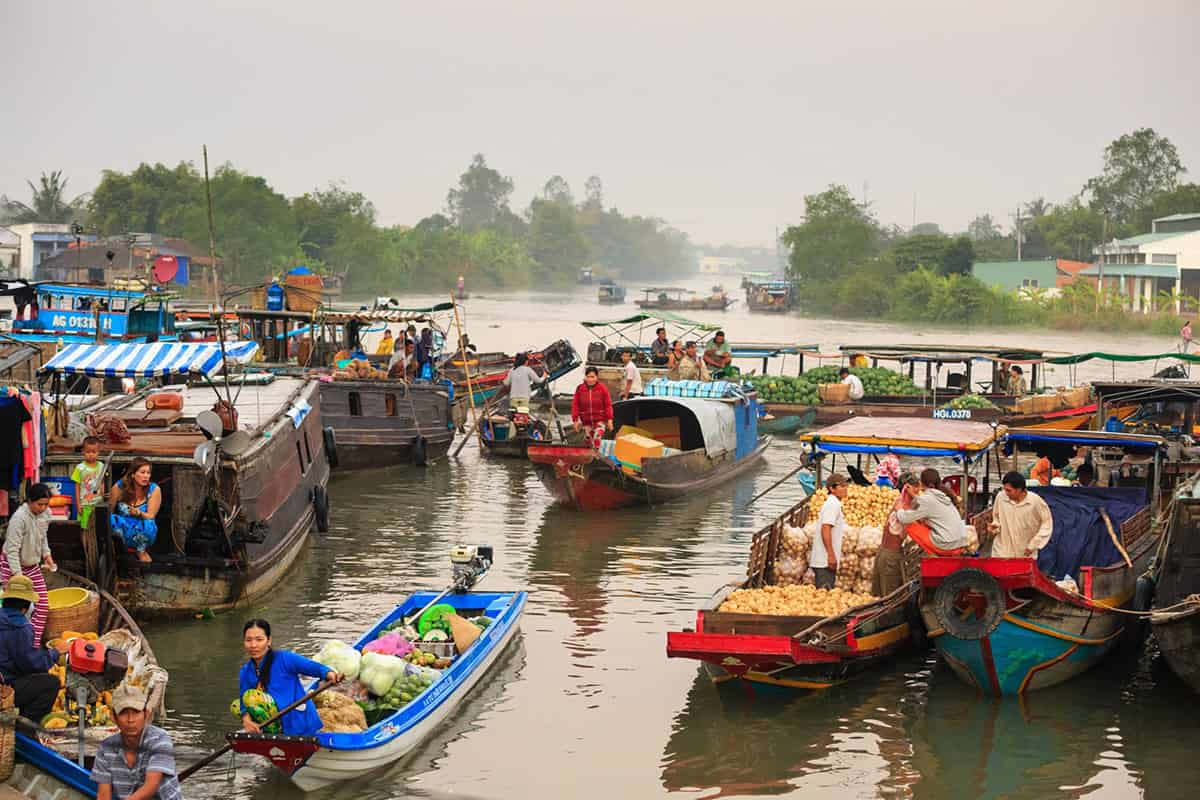
Towns buzz with vendors selling fresh produce, and river traffic is constant. Smaller streams reveal orchards, Buddhist temples, and family homes along the banks.
Life in the delta is centered on the water. You’ll encounter orchards, rice paddies, and lively floating markets.
Top Things to Do in the Mekong Delta:
- Explore Cai Rang Floating Market
The Mekong Delta, called the ‘rice bowl of Vietnam,’ produces much of the country’s fresh produce. Cai Rang is one of the biggest floating markets, where boats filled with fruits and vegetables gather to trade. For a close view, ride a traditional boat through the market.
- Stay with a Local Family in Vinh Long
Vinh Long is a key transit hub with many family homes along its streams. These families now welcome visitors, offering simple yet clean guest rooms and home-cooked meals, giving you insight into their way of life.
- Walk Through Sa Dec
Sa Dec, once a stopover and a former US patrol base, is a quiet trading port with French colonial houses. Visit the Huynh Thuy Le Old House, which inspired Marguerite Duras’s novel “The Lover.” Walk through the riverside market and see stalls selling fruits and vegetables.
- View from Sam Mountain
In Chau Doc, near the Cambodian border, Sam Mountain offers great views of the delta. Climb the mountain to see colorful temples, a trail of ceramic dinosaurs, and sunrise views. Cafés and shops along the path make for a pleasant breakfast stop.
- Cruise on a Converted Rice Barge
Take a one- or two-night cruise on a converted rice barge like the Bassac fleet to see life along the Mekong Delta. These barges are charming and well-furnished, with guides sharing their history as you visit local villages and markets.
Visit between October and March for high water levels, enabling boat markets and river trips. January to March offers the best overall weather but can be more expensive around Tet (Vietnamese New Year). For lower hotel rates, consider late September when the monsoon has ended, and the harvest begins.
The delta in numbers
Vietnamese Wikipedia gives the Mekong Delta an area of 36,426.89 square kilometers and about 15.7 million people in 2024. It lies next to the southeast region, borders Cambodia to the northwest and faces the Gulf of Thailand and the East Sea, and its southernmost point is Dat Mui in Ca Mau. It includes offshore islands such as Phu Quoc, the Tho Chu islands and the Hon Khoai islands, and it divides into three subregions. Floating markets such as Cai Rang near Can Tho are the best-known stops; see our Can Tho page. We have not verified market hours, boat prices or the number of river branches, so check them before you go.
Sources (read in Vietnamese, Vietnamese Wikipedia): Đồng bằng sông Cửu Long. Last checked November 2026.
Mekong Delta: FAQ
How big is the Mekong Delta in Vietnam?
36,426.89 square kilometers, with about 15.7 million people in 2024.
What does the Mekong Delta border?
Cambodia to the northwest, the Gulf of Thailand to the southwest and the East Sea to the southeast.
Which islands belong to the Mekong Delta region?
Phu Quoc, the Tho Chu islands and the Hon Khoai islands.
What is the southernmost point of Vietnam’s mainland?
Dat Mui in Ca Mau, in the Mekong Delta region.
How many days do you need in the Mekong Delta?
One to two nights, usually based at Can Tho.