Nanjing is the capital of Jiangsu Province and a former capital of several dynasties and regimes, including the Eastern Wu, the Ming, the Taiping Heavenly Kingdom and the Republic of China, which is why Chinese sources call it the ancient capital of six dynasties. Today it combines Ming-era monuments, the mausoleum of Sun Yat-sen and Republic-era buildings with a large university city. It sits on the lower Yangtze, about 6,582 square kilometers in 11 districts.
| Sun Yat-sen Mausoleum | built 1926 to 1929, finished 1931; designed by Lu Yanzhi; national protected site 1961; 5A since 2007 |
|---|---|
| Ming Xiaoling Mausoleum | tomb of the Hongwu emperor and Empress Ma; about 25 years to build, finished 1405; World Heritage since 3 July 2003 |
| City wall | inner wall 35.267 km around; about 25 km survive; described as the longest surviving ancient city wall in the world |
| Memorial Hall | opened 15 August 1985; expanded 1995 and 2005; site about 74,000 m² |
| National memorial day | 13 December, set in 2014; air-raid sirens test each year since 1996 |
Sun Yat-sen Mausoleum
Sun Yat-sen died in Beijing on 12 March 1925 and asked to be buried at the foot of Purple Mountain in Nanjing. Building began in January 1926 and the main halls were done by spring 1929, with the burial ceremony on 1 June that year and the whole project finished in 1931. Lu Yanzhi designed it in the plan of an alarm bell, with the archway, gate, stele pavilion and sacrificial hall rising in order up the gentle slope, under blue-tiled roofs. It is considered a classic blend of Chinese and Western building methods. Allow half a day with the Ming tomb next door.
Ming Xiaoling Mausoleum
The Xiaoling is the joint tomb of the Ming founder, the Hongwu emperor, and Empress Ma, whose posthumous title Xiaoci gives it its name. Work began in the early Hongwu years, the empress was buried in 1382 and the emperor in 1398, and the whole complex was finished in 1405 after about 25 years. Chinese Wikipedia calls it the largest imperial tomb in Nanjing and the model for the Ming and Qing imperial tombs that followed. UNESCO listed it in 2003 together with the tombs of six of the emperor’s generals. The underground burial chamber has not been opened.
The Ming city wall
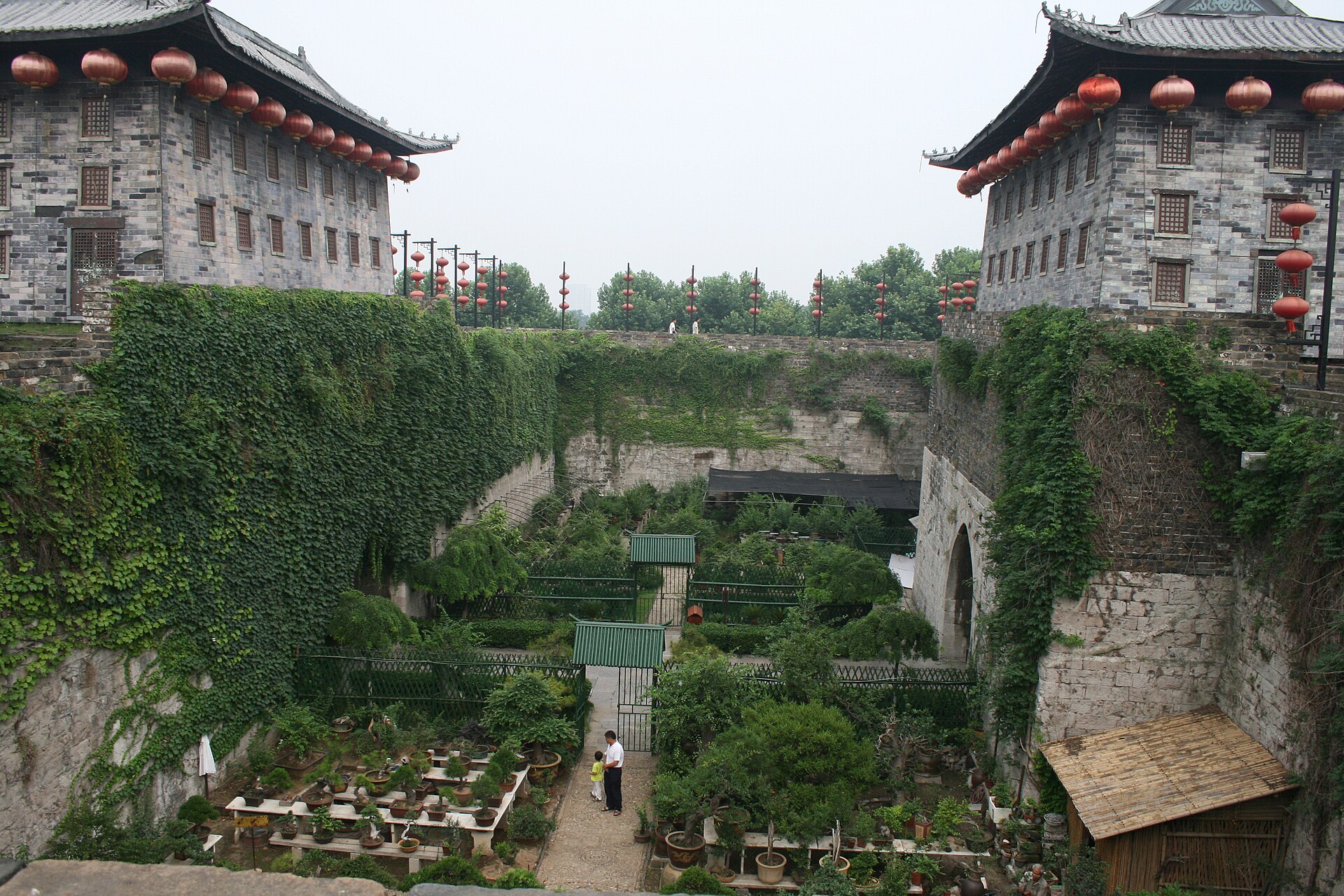
The Ming inner city wall, built around the early capital, is 35.267 kilometers around and about 25 kilometers of it remain in good condition, about two thirds of the original length. Chinese Wikipedia describes it as the longest surviving ancient city wall in the world. Of the 13 gates, Zhonghua Gate (the old Jubao Gate), Shicheng Gate, Shence Gate and Qingliang Gate survive from the Ming. The wall followed the terrain, with Purple Mountain to the east and the Qinhuai River to the south, so it is irregular, not square.
Memorial Hall of the Victims of the Nanjing Massacre
The memorial hall stands at Jiangdongmen, a site where victims were buried, and opened on 15 August 1985 on the 40th anniversary of the end of the war. It was expanded in 1995 and again in 2005, and now covers about 74,000 square meters with exhibition, memorial, peace park and collection areas. China’s national memorial day for victims of the Japanese invasion falls on 13 December, set by law in 2014, and Nanjing has tested air-raid sirens on that date each year since 1996. A visit is serious in tone and takes two to three hours. Visitors should dress and behave respectfully.
Planning Nanjing
Nanjing is on the high-speed rail line between Shanghai and Beijing, so many travelers add a night between Shanghai or Suzhou and Beijing, and see the Sun Yat-sen and Ming mausoleums, the wall and one of the museums. Two days is comfortable. See also our China tours.
Planning Nanjing with Absolute Asia Tours
Absolute Asia Tours has planned private trips in Asia since 1989. For Nanjing that means a guide who sequences the mausoleums and the wall, a driver on Purple Mountain, and a hotel near the old center. We’re rated 4.8 out of 5 across about 900 traveler reviews. See our China tours or tell us your dates.
Sources (read in Chinese, Chinese Wikipedia): 南京市, 中山陵, 明孝陵, 南京城墙, 侵华日军南京大屠杀遇难同胞纪念馆, 南京大屠杀死难者国家公祭日. Last checked November 2026.
Nanjing: FAQ
What is Nanjing known for?
Its history as a capital of several dynasties, the Ming tomb and city wall, the Sun Yat-sen Mausoleum and the Nanjing Massacre Memorial Hall.
How long is the Nanjing city wall?
The Ming inner wall was 35.267 kilometers around, and about 25 kilometers survive.
When was the Sun Yat-sen Mausoleum built?
From 1926 to 1929, with the whole project finished in 1931.
Is the Ming Xiaoling a World Heritage Site?
Yes, since 3 July 2003.
How many days do you need in Nanjing?
Two days covers the mausoleums, the wall and a museum.
Photo: Gary Todd, Wikimedia Commons, CC0. The Ming city wall at Zhonghua Gate, Nanjing.
