| Park established | plan announced 1 September 1982; management office from 1 January 1984; Taiwan’s first national park after the war |
|---|---|
| Area | 33,290 hectares: 18,084 on land and 15,206 at sea |
| Location | southern tip of Taiwan on the Hengchun Peninsula, in Pingtung County |
| Southernmost point | Eluanbi Cape, with its lighthouse |
| Wind | the luoshan wind blows from October to March |
| Name origin | Kenting began as a settlement of Hakka laborers in 1877 |
Taiwan – Getting to know Kenting National Park
Occupying the entire southern tip of the island, Kenting National Park is one of the most picturesque areas in Taiwan, encompassing beautiful beaches and low mountains, ancient villages, ecological protection areas and fishing harbours. For this reason, Kenting is one of the island’s most popular destinations, along with Sun Moon Lake and Taroko National Park.
Taiwan Kenting National Park Travel Guide
Hengchun Township is the main town in the National Park and was once surrounded by an immense city wall, dating from the Qing-era; now only half of the wall remains intact, as well as the four city gates. Walk on the old city walls and wander the streets and alleyways of the old town, visiting arts and craft shops, small eateries and cafés, where you can sample the local speciality – glutinous rice balls stuffed with green bean paste, and onion ice-cream (niche!). For an authentic local experience, visit Hengchun’s Sunday Night Market.
Nearby is Kenting Town, Taiwan’s most popular beach destination with a relaxed Hawaiian-Thai vibe thanks to year-round tropical sunshine, white sandy beaches and azure ocean water. Kenting is home to an array of restaurants, street-food stalls selling local delicacies, a lively night market, bars and nightlife. It is a friendly, relaxing base from which to explore the wonders of the National Park.
Getting off the trail in Kenting National Park
Taiwan is possibly one of the most underrated birdwatching destinations in the world, despite boasting 26 endemic birds and more than 60 endemic subspecies, along with a host of East Asian specialities and migrant visitors. From May to October each year, the lakes and mountains of Lungluantan become the perfect site for birdwatching, as a large number of birds migrate south from Siberia, China and Japan for the winter. Situated between Kenting National Forest Recreation Area and Sheding Nature Reserve, Sheding Village is a great location for spotting Red-Bellied Eagles and Black-Chested Buzzard-Eagles during these months.
Head to Sheding Nature Reserve, formerly the land of the Aboriginal Paiwan people, who are now guardians of its forests. The Paiwan have developed ecology tour programmes, taking visitors into the forests in search of Formosan Skia deer which have been reintroduced to the area, land crabs, tree frogs and glowing mushrooms.
Another natural but bizarre phenomenon that occurs in Kenting National Park is Chuhuo, also known as ‘Hengchun Eternal Flames’, caused by the rising of natural gas through the cracks in the mudstone and igniting when reaching the surface. The flames are best viewed at night when the place becomes magical.
YOHO Bike Hotel, Asia’s first-ever bike hotel can be found in Kenting. Designed specifically for ‘bike travellers’, guest rooms are equipped with bicycle wall hangers, and there is a Bike Spa & Workshop for repairs and maintenance. Cycling is a great way to explore the countryside near the hotel, but those wishing to relax can soak in the hot springs or chill on the beach at Baisha Bay, which is a few minutes’ walk away.
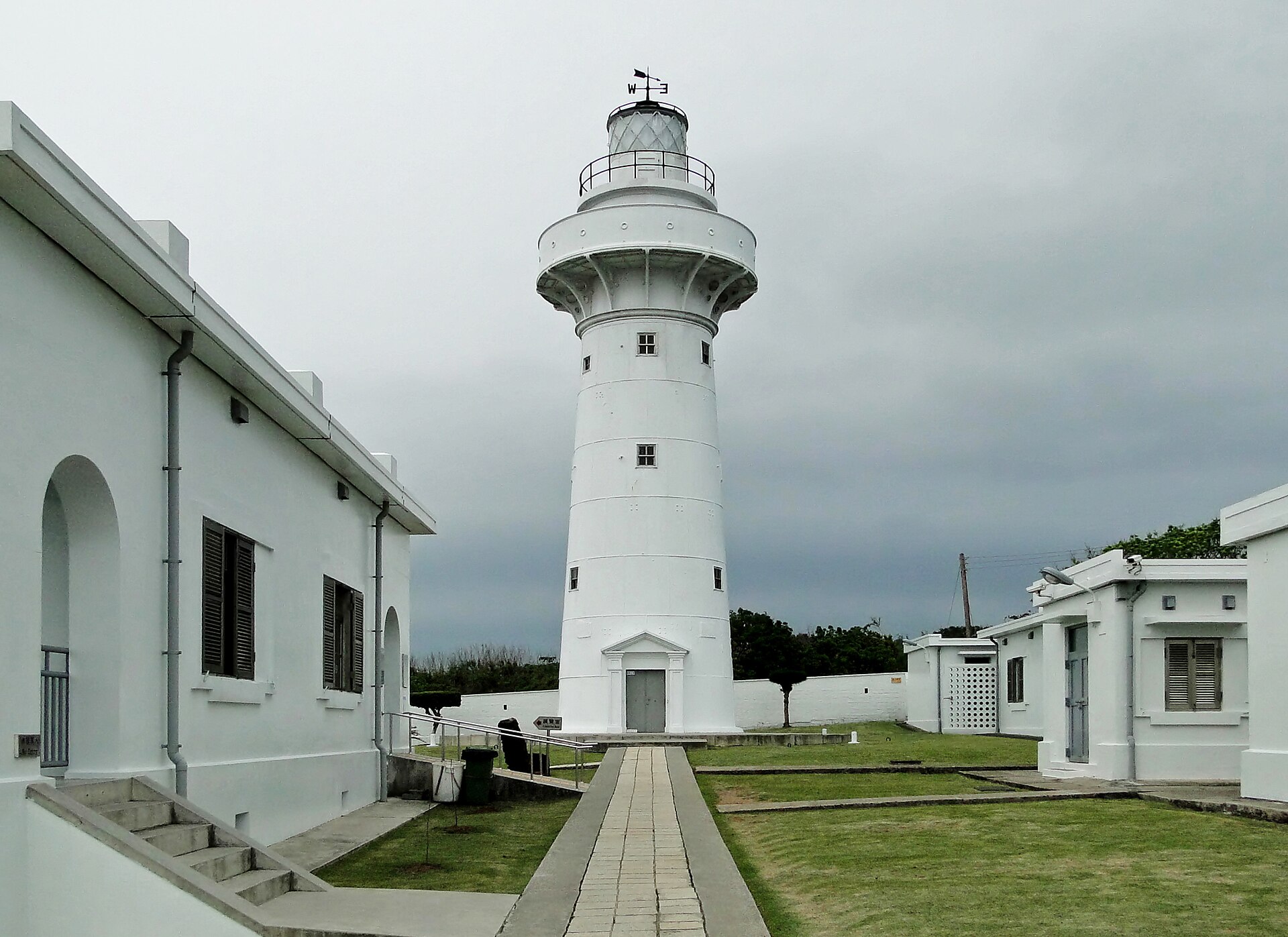
On clear days, the islands of the Philippines are visible from Cape Eluanbi, with its lighthouse.
What to do at Kenting National Park
Explore Taiwan’s only botanical garden at the Kenting National Forest Recreation Area with its numerous species of flora and fauna and stalactite caves.
Relax on the white sandy beaches of Baisha and Nanwan or watch the sun rising out of the vast Pacific Ocean from Fengchueisha – famous for its wind and sand!
Active travellers should head to Little Bali Bay for a spot of snorkelling, learn to surf at Jialeshuei while marvelling at the curious rock formations, or cycle along the coastline to take in the shimmering seascapes and up the rolling hills towards Pingtung County to discover Taiwan’s pre-historic sites.
Photo: Bernard Gagnon, Wikimedia Commons, CC BY-SA 3.0. Eluanbi Lighthouse in Kenting National Park.

When to go: the winter wind
Kenting is tropical monsoon country with warm weather year-round, but the Hengchun Peninsula has a winter wind called the luoshan. From October to March the northeast monsoon funnels down the Central Mountain Range and speeds up as it crosses the narrow valleys of the peninsula, which can fill the air with sand and affect driving. Plan beach days with the wind in mind, and check the forecast.
Eluanbi and the southern tip
Eluanbi Cape marks the southernmost point of Taiwan’s main island, and the white lighthouse there is the park’s best-known landmark. Kenting Street, the night market, is at the foot of Dajianshi Mountain. Hengchun’s old town walls are a short drive away.
Sources (read in Chinese, Chinese Wikipedia): 墾丁國家公園. Last checked November 2026.
Kenting National Park: FAQ
When was Kenting National Park established?
The plan was announced on 1 September 1982 and the management office opened on 1 January 1984. It was Taiwan’s first national park after the war.
Where is Kenting National Park?
At the southern tip of Taiwan on the Hengchun Peninsula, in Pingtung County.
What is the luoshan wind?
A winter wind from October to March, when the northeast monsoon accelerates through the peninsula’s valleys.
How big is Kenting National Park?
33,290 hectares, of which 15,206 are sea.