Hiroshima is a modern, easygoing city on a river delta, and it’s also the place the world associates with the first atomic bomb. A visit here is one of the most moving in Japan. It’s also easy to combine with Miyajima, a sacred island with a famous shrine, about an hour away.
| A-Bomb Dome | built 1915, UNESCO 1996 |
|---|---|
| Bombing | 6 August 1945, 8:15 am |
| Peace Memorial Park | completed 1 April 1954 |
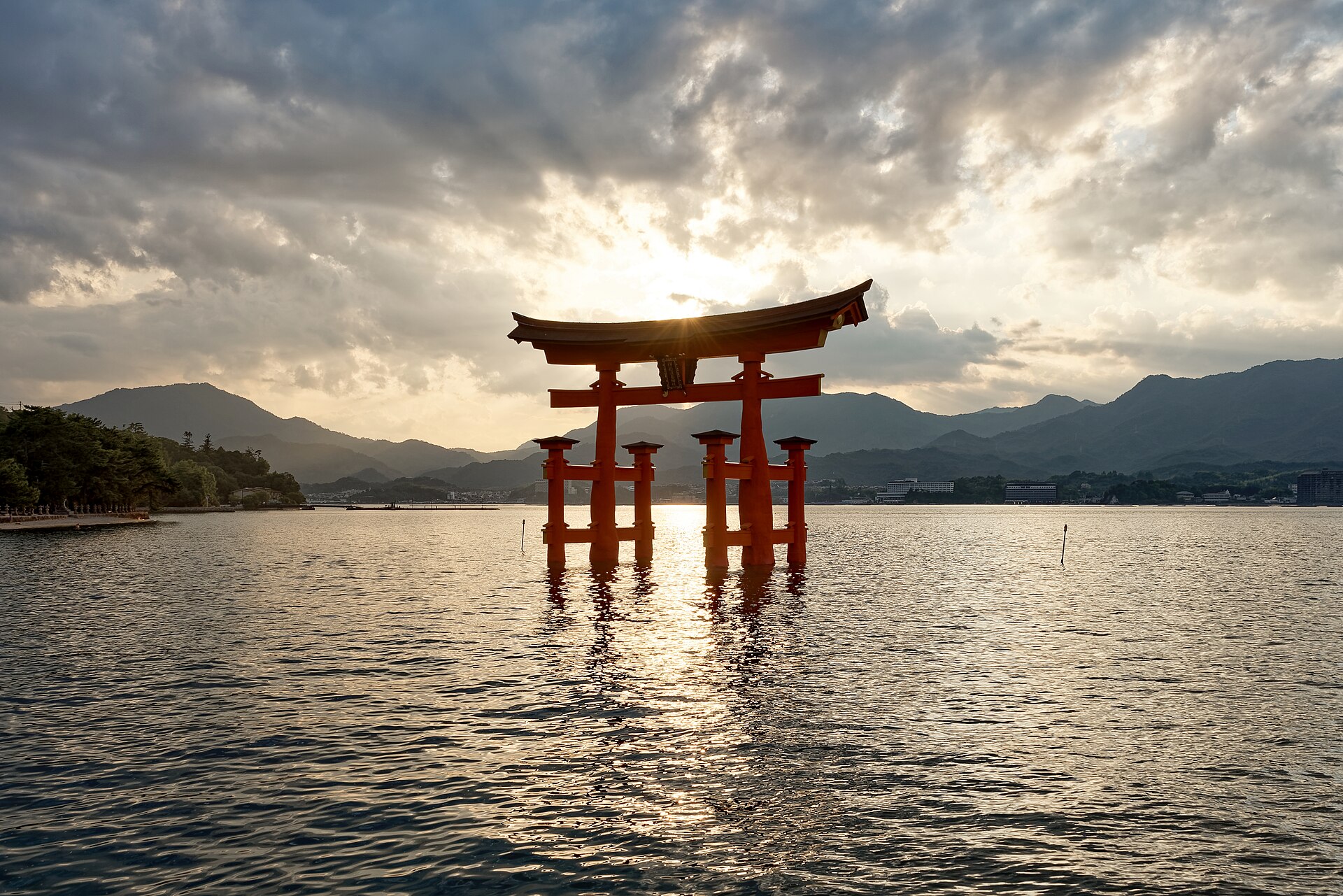
| Itsukushima torii | 16 m high |
| Shukkeien garden | begun 1620 |
The Atomic Bomb Dome
The A-Bomb Dome was built as the Hiroshima Prefectural Commercial Exhibition Hall. It was finished on 5 April 1915 and opened that August, designed by the Czech architect Jan Letzel. It was partly built of reinforced concrete, then still unusual in Japan, with three floors above ground and one below.
On 6 August 1945, at 8:15 in the morning, an atomic bomb was dropped on the city. It exploded about 600 meters above a point 150 meters east of the building, and the Dome’s frame was left standing while most of the surrounding city was destroyed. The ruin has been preserved as it was left. UNESCO listed it as a World Heritage Site on 5 December 1996, and in September 2025 it became the first modern site in Japan designated a National Special Historic Site. Look at it from the riverbank, and keep out of the fenced area.
Peace Memorial Park and the museum
The park beside the Dome was a busy commercial district called Nakajima before 1945. It was laid out as a park after the war and completed on 1 April 1954, on a single axis that links the Peace Memorial Museum, the cenotaph and the Dome. Each year on 6 August a ceremony is held here, with a silent prayer at 8:15. The museum is the place to understand what happened; allow at least two hours, and consider visiting it before the park so that the memorials have context. Visit with respect: this is a place of mourning.
Shukkeien garden
A short walk from the center, Shukkeien is a garden begun in 1620 for the local lord, Asano Nagaakira, and designed with the tea master Ueda Soko. It was given to the prefecture in 1940, wrecked in 1945, and rebuilt by the 1970s. It’s a calm place to sit after the park and museum.
Miyajima and Itsukushima Shrine
Miyajima, formally Itsukushima, is a small island in the Seto Inland Sea, and it counts as one of Japan’s Three Views. The shrine on its shore is traditionally dated to 593, and in about 1168 the warlord Taira no Kiyomori rebuilt it as the large complex of halls and corridors you see now, standing over the water. Six of its buildings are National Treasures and 14 are Important Cultural Properties. UNESCO listed it in December 1996. The great torii gate stands 16 meters high in the sea, and the way it appears to float depends on the tide, so check the tide table: at high tide it stands in water, and at low tide you can walk to it across the sand.
Behind the shrine, Mount Misen rises to 535 meters, and you can reach the top by ropeway or on foot. Give Miyajima half a day.
What to eat
Hiroshima-style okonomiyaki is a savory pancake in which the ingredients are layered rather than mixed, usually with noodles, and it’s the city’s signature dish. Miyajima is also known for grilled oysters, in season.
How to plan it
Hiroshima is on the Shinkansen line between Osaka and Fukuoka. A single day can cover the park, the museum and Miyajima if you start early; two days is better, with the shrine at the end of the day when the crowds thin. See our guides to Kyoto, Osaka and Kobe, and our Japan tour packages.
Planning Hiroshima with Absolute Asia Tours
Absolute Asia Tours has planned private trips in Asia since 1989. In Hiroshima that means a guide who can lead you through the museum and park with care, a ferry and tide schedule worked out for Miyajima, and a table for okonomiyaki. We’re rated 4.8 out of 5 across about 900 traveler reviews. Have a look at our Japan tours or tell us your dates.
Sources (read in Japanese, Japanese Wikipedia): 広島市, 原爆ドーム, 厳島神社, 縮景園. Last checked November 2026.
Hiroshima and Miyajima: FAQ
How many days do you need in Hiroshima?
One long day for the park, the museum and Miyajima, or two days for a slower pace.
What is the Atomic Bomb Dome?
The ruin of the former Prefectural Commercial Exhibition Hall, left as it stood after the bombing on 6 August 1945, and a UNESCO World Heritage Site since 1996.
When is the Peace Memorial Ceremony?
Each year on 6 August, with a silent prayer at 8:15.
How tall is the Miyajima torii?
16 meters. Its appearance depends on the tide.
How far is Miyajima from Hiroshima?
About an hour by train and ferry, depending on connections.
What is Hiroshima-style okonomiyaki?
A savory pancake with layered ingredients, usually with noodles.
Photo: Jakub Hałun, Wikimedia Commons, CC BY 4.0.
