| Size | third largest of Japan’s four main islands |
|---|---|
| Population | about 12.57 million in seven prefectures (2023); 14.04 million with Okinawa |
| Highest point on the island | Nakadake in the Kuju range, 1,791 m |
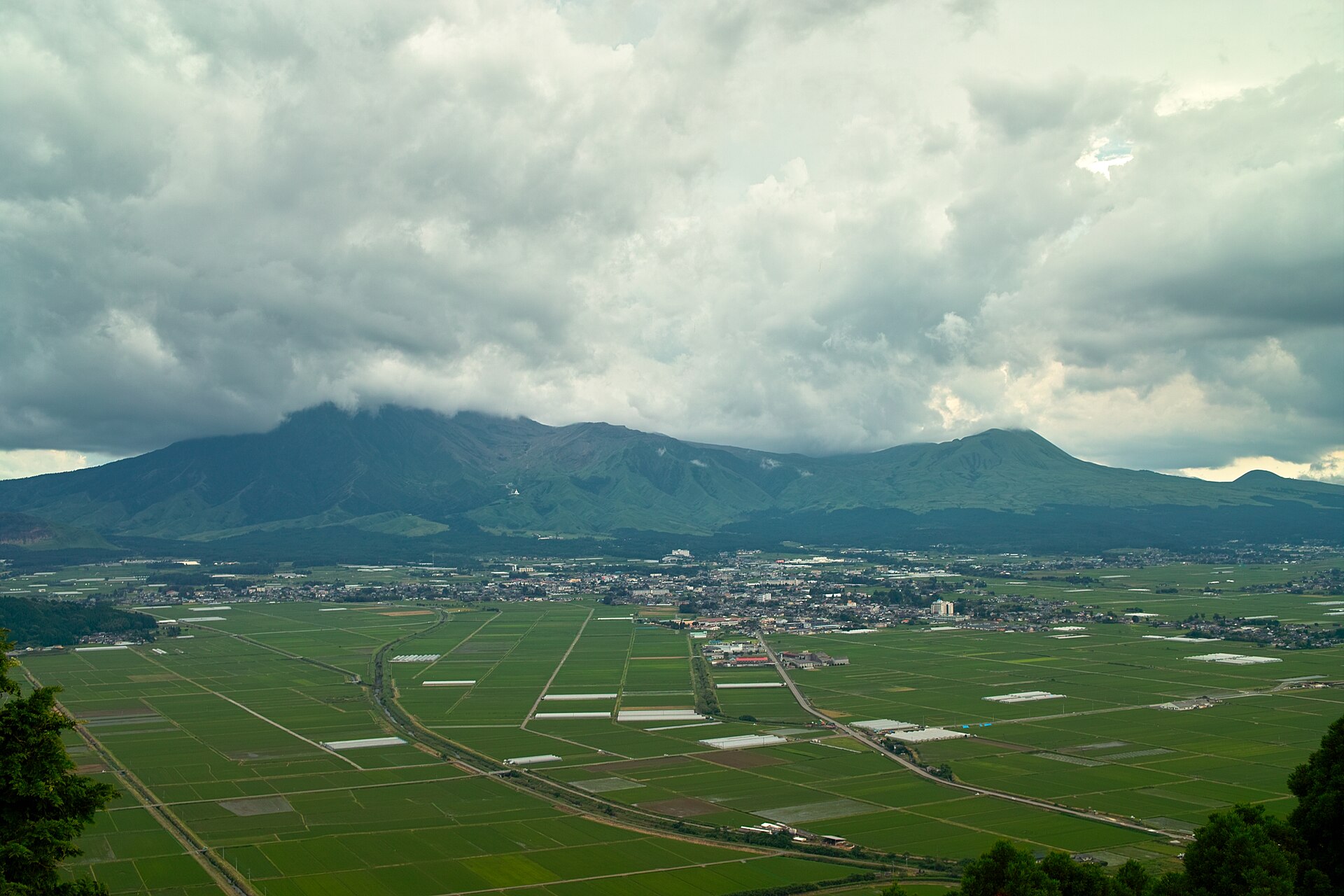
| Mount Aso | caldera 25 km north to south and 18 km east to west; highest peak Takadake, 1,592 m; a UNESCO Global Geopark since 2009 |
| Kumamoto Castle | 13 buildings are Important Cultural Properties; site is a Special Historic Site |
| Beppu | most hot spring sources and output of any place in Japan; more than 8 million visitors a year |
| Yakushima | Kyushu region’s highest peak, Miyanoura (1,936 m); World Heritage since 1993 |
Japan – Kyushu: Island Guide
The southernmost of Japan’s four main islands, Kyushu has port cities that are easy to reach from the rest of Asia by boat and plane, and the island is seismically active, with many hot springs, volcanoes, mountains and beaches, and a culture shaped by its closeness to mainland Asia.
Japan Kyushu Travel Guide
First stop for many visitors is Fukuoka, the largest city on the island, on the bullet train line along the northern shore; a ferry ride from Korea, the city is famous for its ramen noodle broths flavoured from pork bone, and marinated cod roe. On a west coast peninsula sits Nagasaki, a port with deep water that kept Japan’s link to the outside world for centuries. For views over the city, take the cable car up Mount Inasa, by day or at night.
The bullet train now stretches down Kyushu’s west coast to Kumamoto, with its samurai-era castle. Kato Kiyomasa rebuilt it around an older fortress, and the main keep and palace buildings burned just before the Satsuma Rebellion of 1877. These days, the fieriest encounter you’ll have in Kumamoto is with the local delicacy, karashi renkon – lotus root stuffed with mustard.
Beyond Kumamoto, a short boat ride or cycle hop lands you on the far western Amakusa islands, interlinked by bridges and incongruous in their stunning rural vistas; home to Japanese Catholics for several centuries, the magical islands are dotted with European-style churches that rise up between the rice fields and forested peaks.
Inland, the green peaks and valleys around Kyushu’s Mount Aso offer hiking and cycling, with views across one of Japan’s largest calderas and cattle grazing on the grassy slopes. Kurokawa Onsen, a hot spring town north of the mountain, has quiet ryokan. For the founding myths of ancient Japan, go to Takachiho, where the Shinto sun goddess is said to have hidden from her brother.
Carving deep into Kyushu’s south coast, Kagoshima Bay can be hot enough to brew tea, thanks to spluttering volcanic Sakurajima (‘cherry blossom island’), which emerges from the water. Try lying in one of the hot sand baths on the beach in the onsen town of Ibusuki, although perhaps before you sample the local strong liquor, shochu, which is distilled in Kagoshima and popular all over Japan. Kagoshima samurai were instigators of change in the mid 19th century, trading with foreign vessels and rebelling against the feudal government in Tokyo; they eventually rebelled too much, and were defeated, the last samurai leader dying here after the bloody battle that savaged Kumamoto castle.
Take a ferry due south from Kagoshima, and you’ll arrive at the gorgeous UNESCO Biosphere reserve that is Yakushima, a mountainous island covered in otherworldly forests of thousand-year-old cedar trees, clad in moss and vines, that reputedly inspired Miyazaki’s Princess Mononoke, as well as historic poets – the call of cuckoos or bush warblers might even inspire you to write a haiku.
The east coast has palm-lined beaches that surfers favor. Usuki has Buddhist statues carved into the rock, Beppu is the hot spring city, and inland from it Yufuin is a hot spring town with a mountain, Mount Yufu, to climb before a soak.
Okinawa
Far to the south – half way to Taiwan, in fact – the Okinawa Islands were an independent kingdom until the mid 19th century, and are famous for their huge US military bases, established during the 1940s and still covering about 20% of Okinawa Hontō. The islands are also known for their wonderful beach resorts, snorkelling and reefs, and their extraordinary cuisine – from the miracle mozuku seaweed, which is harvested with a hoover from the ocean floor, to the bitter pimply green goya plant, raw goat sashimi, and an islandwide obsession with SPAM.
Photo: t-mizo, Wikimedia Commons, CC BY 2.0. Mount Aso and the caldera floor.

How to plan Kyushu
Kyushu is large, so pick a region. North Kyushu has Fukuoka and Nagasaki, central Kyushu has Mount Aso, Kumamoto and the hot-spring towns of Kurokawa and Beppu, and the south has Kagoshima, Sakurajima and Yakushima. A first trip of five to seven days usually links Fukuoka, Kumamoto or Aso, and Nagasaki by train or car. Mount Aso is an active volcano, so access to the crater area is restricted when activity rises or toxic gas appears; check the current status. Kumamoto Castle was damaged in the April 2016 earthquake, so check which parts are open. Our Hiroshima and Miyajima page and Osaka page show how Kyushu connects with the main island.
Highlights in brief
- Mount Aso. One of the largest calderas in Japan, with five central peaks called the Aso Gogaku. Hiking and views across the caldera floor.
- Beppu. Known for the Beppu Hells, hot springs that Japanese sources count as the most numerous and productive in Japan.
- Kumamoto Castle. A Special Historic Site with 13 surviving Important Cultural Property structures.
- Yakushima. An island whose forest of Yakusugi cedars made it one of Japan’s first World Heritage Sites in 1993.
Sources (read in Japanese, Japanese Wikipedia): 九州, 阿蘇山, 熊本城, 別府温泉, 屋久島. Last checked November 2026.
Kyushu: FAQ
How many days do you need in Kyushu?
Five to seven days for a first trip linking Fukuoka, Kumamoto or Aso, and Nagasaki.
What is Kyushu known for?
Active volcanoes such as Mount Aso, hot springs including Beppu, Kumamoto Castle, Nagasaki’s harbor and Yakushima’s old cedars.
Is Mount Aso safe to visit?
It is an active volcano. Access to the crater area is restricted when activity rises or toxic gas appears, so check the current status.
How big is Mount Aso’s caldera?
About 25 kilometers north to south and 18 kilometers east to west.
Is Kyushu the southernmost island in Japan?
It is the southernmost of the four main islands. Okinawa and other islands lie farther south.