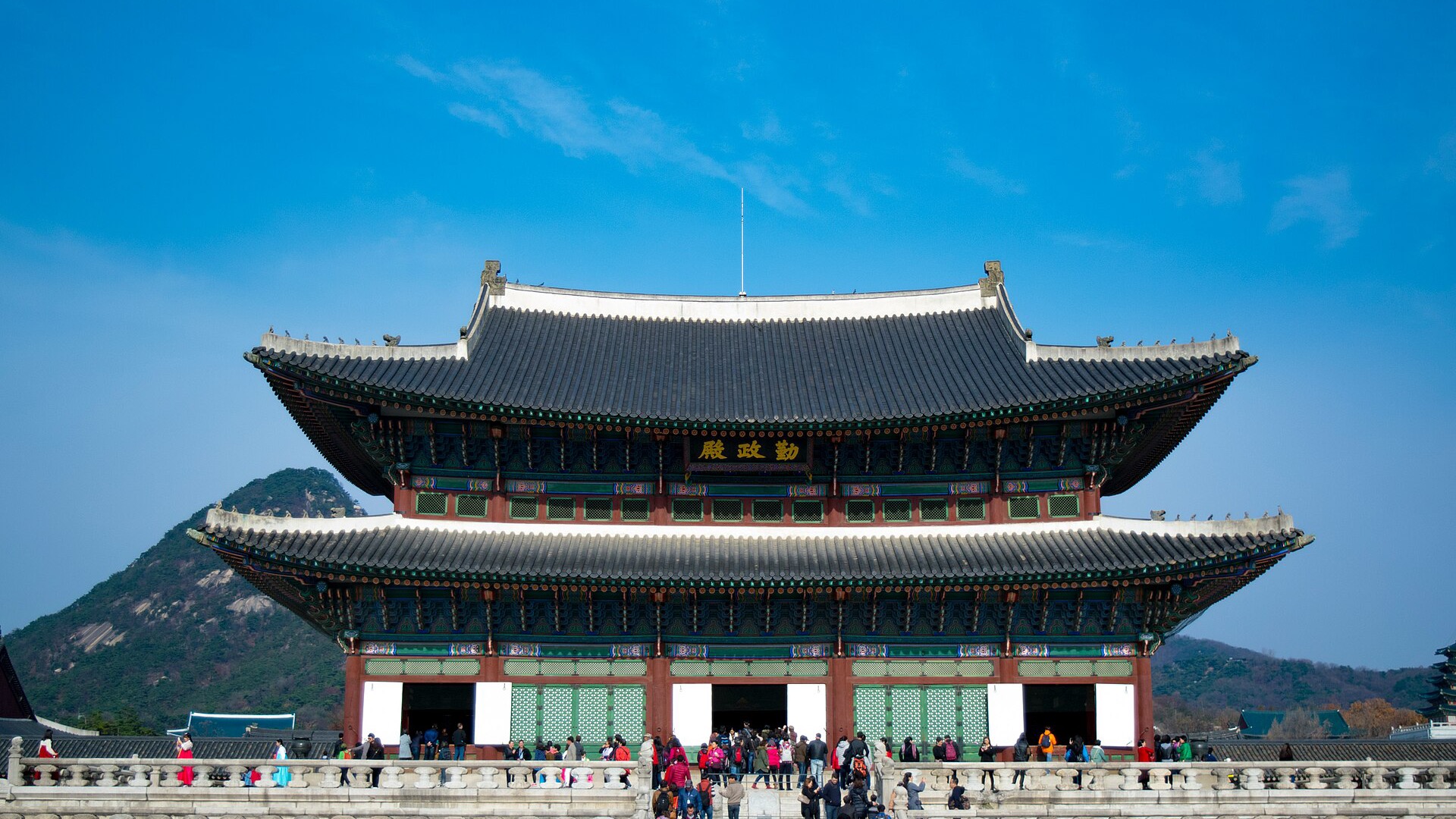
Seoul runs on two clocks at once. Six-hundred-year-old palaces and tile-roofed hanok houses sit beneath glass towers, and a Buddhist temple can stand a block from a K-beauty flagship store. It is safe, efficient and endlessly energetic, and the best way to enjoy it is neighborhood by neighborhood. Here are the experiences we recommend most.
| Gyeongbokgung | founded 1395; rebuilt from 1865; Gwanghwamun gate rebuilt in timber in 2010 |
|---|---|
| Changdeokgung | built 1405; UNESCO World Heritage since 1997; the Secret Garden is its rear garden |
| Gwangjang Market | opened 1905; described as Korea’s first permanent market |
| N Seoul Tower | 236.7 m tall, 479.7 m above sea level; opened to the public 15 October 1980 |
| Dongdaemun Design Plaza | opened 22 March 2014; designed by Zaha Hadid; 45,133 aluminum panels |
| T-money card | introduced 1 July 2004 with Seoul’s transit overhaul |
Palaces and old Seoul
1. Gyeongbokgung Palace in a hanbok
The grandest of Seoul’s five Joseon-dynasty palaces sits beneath the mountains at the head of Gwanghwamun Square. Watch the free changing of the guard at the main gate, then explore the throne hall and the lotus-pond pavilion of Gyeonghoeru. Rent a hanbok, Korea’s traditional dress, from one of the many shops near the palace (roughly 15,000 to 32,000 won for a few hours); visitors wearing hanbok have long been admitted free to the royal palaces. The palace is closed on Tuesdays.
2. Changdeokgung and its Secret Garden
A UNESCO World Heritage palace that blends into the hillside, with a hidden royal garden visited on guided tours. Book the garden tour ahead in spring and autumn.
3. Bukchon Hanok Village, at the right time
Hundreds of traditional hanok homes line the hills between the palaces, and people still live in them. To protect residents, the busiest lanes along Bukchon-ro 11-gil are now closed to tourists from 5pm to 10am, with fines of 100,000 won for visitors who linger. Come between 10am and 5pm, keep your voice down and do not photograph doorways or residents.
4. Insadong and Ikseon-dong
Insadong is the place for tea houses, calligraphy brushes and celadon pottery. A short walk east, the narrow lanes of Ikseon-dong are full of cafés and restaurants inside converted hanok.
5. Jogyesa Temple
The heart of Korean Zen Buddhism, right in the city center. In spring the courtyard is hung with thousands of paper lanterns for Buddha’s Birthday.
Modern Seoul
6. Namsan and N Seoul Tower
Walk or take the cable car up Namsan for the classic view over the city, best at sunset as the lights come on.
7. Myeongdong and Gwangjang Market
Myeongdong is Seoul’s shopping and street-food district; Gwangjang Market is where locals go for mung-bean pancakes, mayak gimbap and raw beef bibimbap at crowded counters.
8. Dongdaemun Design Plaza
Zaha Hadid’s flowing silver landmark hosts exhibitions and, by night, glows above one of Seoul’s 24-hour fashion markets.
9. Gangnam and Seongsu
South of the river, Gangnam is all flagship stores and high-end dining; Seongsu, once a district of shoe factories, is now Seoul’s coolest neighborhood for design shops and coffee.
10. The Han River
Locals unwind in the riverside parks, especially at Yeouido and Banpo, where the bridge fountain lights up on summer evenings. Rent a bike or take an evening cruise.
Experiences and day trips
- 11. A temple stay: a night at a Buddhist temple with meditation and a monastic dawn service.
- 12. A Korean cooking class: kimchi, bulgogi and banchan side dishes.
- 13. A jjimjilbang: Korea’s bathhouse culture of hot pools, saunas and heated floors.
- 14. The DMZ: the border with North Korea, visited on a guided tour from Seoul (passport required).
- 15. Suwon’s Hwaseong Fortress: a UNESCO-listed fortress wall walk an hour south of the city.
Seoul itinerary: four days
Searches for “Seoul itinerary 4 days” and “5 days” are where most travelers start, and the best plans group each day by area to avoid long subway rides. This is the order we use.
| Day | Area | Plan |
|---|---|---|
| 1 | Jongno, old Seoul | Gyeongbokgung, Bukchon, Insadong and Ikseon-dong, then dinner at Gwangjang Market |
| 2 | Central Seoul and Namsan | Changdeokgung and the Secret Garden, Myeongdong, N Seoul Tower near sunset |
| 3 | Gangnam and Seongsu | Starfield Library at COEX and Bongeunsa Temple, Seongsu cafes, an evening by the Han River |
| 4 | Dongdaemun and Hongdae | Dongdaemun Design Plaza, Hongdae street scene, Korean barbecue dinner |
With five days, add the DMZ or Suwon’s Hwaseong Fortress as a day trip. With three, drop day 4.
Facts that save time
- Changdeokgung’s Secret Garden needs its own entry. Changdeokgung was built in 1405 and became a UNESCO World Heritage Site in 1997. Korean sources note its rear garden is the only palace garden in Korea. Visitors enter the garden with a guided time slot, so book before you go.
- Gwangjang Market. It opened in 1905 and is described as Korea’s first permanent market. Go in the evening for the food stalls.
- N Seoul Tower. It stands 236.7 meters tall on a peak of 479.7 meters above sea level. The observation deck opened to the public on 15 October 1980.
- Dongdaemun Design Plaza. Opened on 22 March 2014 and designed by Zaha Hadid, with 45,133 aluminum panels on its exterior.
- Transit card. The T-money card began on 1 July 2004. Most visitors buy a reusable transit card on arrival and tap it on the subway and buses.
- Maps. Many travelers install Naver Map or KakaoMap, because Google Maps navigation is limited in Korea.
Where to stay in Seoul
Choose Jongno and Gwanghwamun for palaces and old Seoul, Myeongdong for convenience and shopping, or Gangnam for luxury hotels and fine dining. The subway is excellent, but traffic is heavy, so staying central saves time.
When to visit Seoul
Spring (April, cherry blossoms) and autumn (October to early November, fall colors) are the most comfortable and beautiful seasons. Summer is hot and humid with a rainy spell in July; winter is cold and dry, with clear skies and fewer visitors.
Seoul on a private South Korea tour
A private guide brings the palaces’ history to life and helps you navigate markets, menus and neighborhoods like a local. Explore our South Korea tours, then continue to the volcanic coast with our guide to things to do on Jeju Island.
Sources (read in Korean, Korean Wikipedia): 경복궁, 창덕궁, 광장시장, N서울타워, 동대문 디자인 플라자, 티머니. Itinerary structure compared with the questions travelers put to AI search and the pages it cites (Reddit r/koreatravel threads and travel blogs). Bukchon rules: Korea JoongAng Daily and Korea Times. Last checked November 2026.
Things to do in Seoul: FAQ
How many days do you need in Seoul?
Three to four days covers the palaces, the main neighborhoods and a day trip to the DMZ or Suwon.
Can you still visit Bukchon Hanok Village?
Yes, between 10am and 5pm. The busiest lanes are closed to tourists from 5pm to 10am to protect residents, and fines apply.
Is entry to Gyeongbokgung free if you wear a hanbok?
Visitors in hanbok have long been admitted free to Seoul’s royal palaces. The palace is closed on Tuesdays.
What is the best area to stay in Seoul for first-timers?
Jongno or Myeongdong, close to the palaces, markets and the subway network.
What is the best time to visit Seoul?
April for cherry blossoms and October for autumn colors and comfortable weather.
What is a good 4-day Seoul itinerary?
Day 1 palaces and old Seoul, day 2 Changdeokgung, Myeongdong and Namsan, day 3 Gangnam and Seongsu, day 4 Dongdaemun and Hongdae. Grouping by area keeps subway time low.
Do you need to book the Changdeokgung Secret Garden?
Yes. The garden is entered with a guided time slot, so reserve ahead.
What transit card should I use in Seoul?
A T-money card, which has run since 1 July 2004. Tap it on the subway and buses.
Does Google Maps work in Seoul?
For place search, yes, but walking and transit directions are limited, so many visitors use Naver Map or KakaoMap.
Photo: Brady Bellini, Wikimedia Commons, CC0. Geunjeongjeon Hall at Gyeongbokgung Palace.
