| The three ranges | Hida (Northern Alps), Kiso (Central Alps) and Akaishi (Southern Alps) |
|---|---|
| Name | coined by the English mining engineer William Gowland in a guidebook of 1881 |
| Walter Weston | the English missionary often called the father of the Japanese Alps; a memorial stands at Kamikochi |
| Kamikochi | valley at about 1,500 m in Matsumoto; about 10 km long and up to 1 km wide |
| Access to Kamikochi | private cars are restricted all year; buses or taxis are required |
| Jigokudani Monkey Park | opened 1964; at 850 m with over 1 m of snow; about 100,000 visitors a year |
| Matsumoto Castle | one of five castles whose keep is a National Treasure |
The Japanese Alps are three mountain ranges across the central prefectures of Nagano, Gifu, Toyama and Niigata. This guide covers the main places to visit: Togakushi, the snow monkeys, Kamikochi and Shirakawa-go, and how to link them.
For nature lovers, this region definitely catches their eyes right from the first glance. From the snow-capped peaks, ancient villages, to the hiking trails and hot springs, the Alps will add a ton more fun for your Japan tour. But first, you might want to get to know this highland gently to tailor the best itinerary. And this guide to the best things to do in the Japanese Alps will do it!
Praying at Togakushi Shrine
Togakushi Shrine is a group of five shrines around Mount Togakushi in Nagano, and the three best known are the lower, middle and upper shrines, joined by forest paths. The cedar-lined path to the upper shrine passes Kagamiike, a pond that mirrors the peaks.
Along the way, you’ll pass Kagamiike, a mirror-like pond reflecting the surrounding peaks. This is not only a stop for energy recharge, but also one of the most peaceful and rewarding scenery on a Japanese Alps tour.
Meet the Snow Monkeys at Jigokudani Yaen Koen
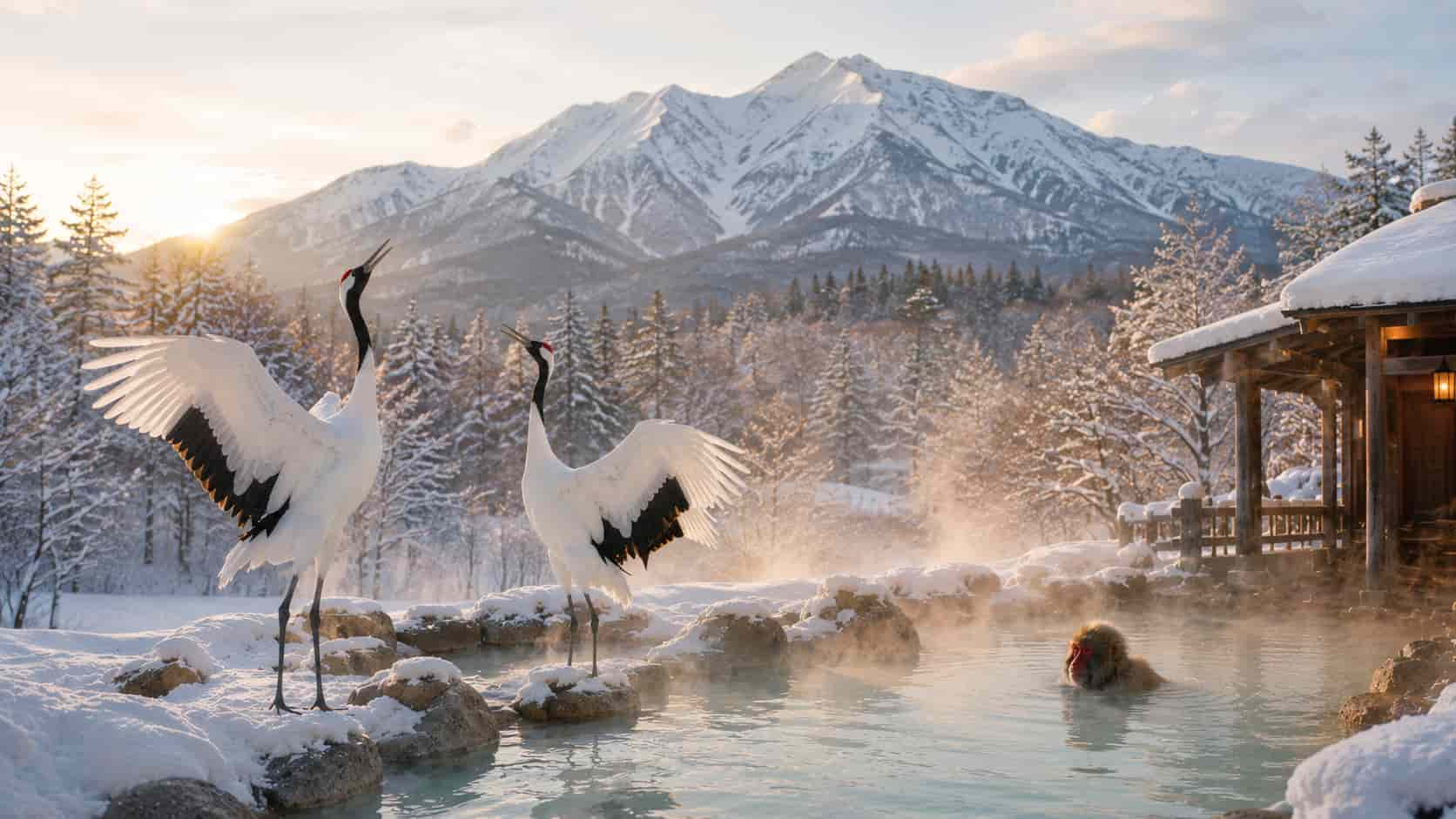
Have you ever seen a snow monkey with a red face? If the answer is no, then go to the Japan Alps! Jigokudani Yaen Koen is one of the most unique attractions in the Japanese Alps and home to the famous snow monkeys.
You can easily see the image of these Japanese macaques soaking in the park’s natural hot springs as their usual habit, especially during winter. Some even make hilarious faces for some awesome pictures!
As Jigokudani Yaen Koen is located within the larger Joshinetsu-Kogen National Park, the area also offers scenic trails and nearby onsen towns like Shibu and Yudanaka. Take as many photos of the trails as you need and then treat yourself to an onsen, just like the snow monkey!
Kamikochi
A highlight of any Japanese Alps tour is Kamikochi, believe it or not! This is a pristine valley in the Azusa River Basin surrounded by towering peaks. Kamikochi suits hikers, with walks along the river and climbs from Kappa Bridge. You can start your adventure at Kappa Bridge, the gateway to trails ranging from leisurely walks to challenging climbs up Mt. Nishi-Hotaka. Kamikochi’s season is short, usually from mid-April to mid-November, so check the opening dates.
Glimpse into Japan’s Past at Shirakawa-go
In Gifu Prefecture, the historic villages of Shirakawa-go and Gokayama offer a window into Japan’s rural traditions. Famous for their Gassho-zukuri farmhouses, with steep thatched roofs designed to withstand heavy snow, these UNESCO World Heritage sites are as picturesque as they are fascinating. Visitors can tour the interiors of some houses or even stay overnight in those converted into guesthouses. For the best views, head to the Shiroyama Viewpoint, which offers a stunning panorama of the valley below.
Absolute Asia Tours arranges Alps trips by season: Kamikochi in summer and autumn, the snow monkeys and Shirakawa-go in winter, and combinations with Takayama, Matsumoto and Tsumago. See our Japan tours.
Which Alps: north, central and south
“Japanese Alps” is a collective name for three ranges in central Honshu. The Hida range, the Northern Alps, spans Toyama, Gifu, Nagano and Niigata prefectures, and its highest peak is Okuhotaka. The Kiso range, the Central Alps, lies in Nagano, with Kisokoma as its highest peak. The Akaishi range, the Southern Alps, crosses Nagano, Yamanashi and Shizuoka, and its highest peak is Kita. Most visitors mean the Northern Alps, where Kamikochi, Matsumoto and Takayama are the usual bases. The glaciers are very limited, since the mountains lie south of the European Alps and are lower, but forests and alpine plants are rich.
Planning: Matsumoto, Kamikochi and Takayama
Matsumoto is the practical base for Kamikochi. Matsumoto Castle, whose keep is a National Treasure, is a good half-day. From Matsumoto the valley is reached by bus or taxi, since private cars are barred. Takayama on the Gifu side is the base for Shirakawa-go; see our Takayama page. Winter brings the snow monkeys of Jigokudani, a short way from the onsen town of Yudanaka. The park is hard to reach in winter, and about 20% of its visitors come from abroad; check road and trail access before you go. Pair the Alps with Tsumago on the Nakasendo.
Togakushi shrines in brief
Togakushi Shrine is a group of five shrines around Mount Togakushi in Nagano. Tradition ties the mountain to the myth in which a piece of the heavenly rock door thrown by the god Tajikarao became the mountain. In the Heian period it was a major center of mountain asceticism.
Sources (read in Japanese, Japanese Wikipedia): 日本アルプス, 上高地, 戸隠神社, 地獄谷野猿公苑, 松本城. Last checked November 2026.
Japanese Alps: FAQ
What are the Japanese Alps?
Three ranges in central Honshu: the Hida (Northern), Kiso (Central) and Akaishi (Southern) Alps.
Who named the Japanese Alps?
The English mining engineer William Gowland, in a guidebook published in 1881. Walter Weston later popularized them.
Can you drive to Kamikochi?
No. Private cars are restricted all year, so you go by bus or taxi.
When can you see the snow monkeys?
They live at Jigokudani Monkey Park all year; the famous hot-spring bathing is seen in winter, when there is over a meter of snow.
Which town is the best base for Kamikochi?
Matsumoto, with Takayama as the alternative on the Gifu side.