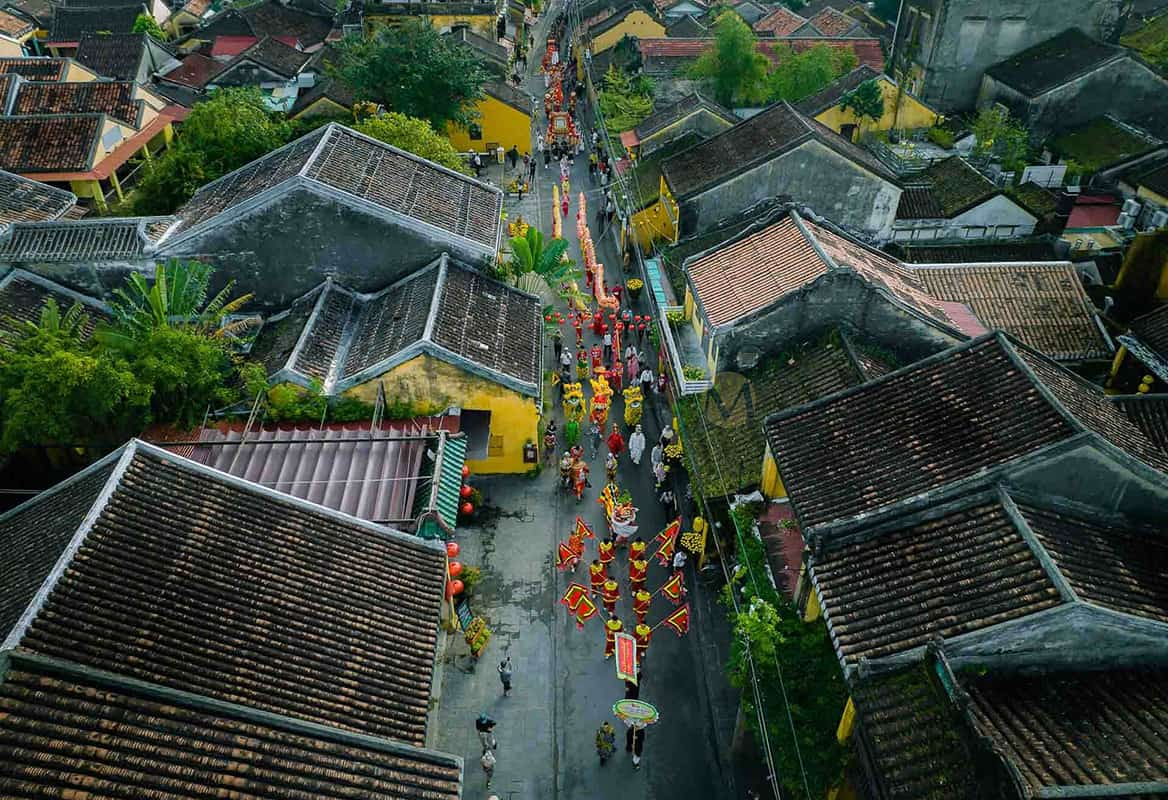
| Old town | well-preserved port town; most houses are traditional buildings from the 17th to 19th centuries |
|---|---|
| Cultural mix | Chinese assembly halls and temples beside Vietnamese town houses and French-style buildings |
| Preservation | spared the worst of the two wars and of heavy urbanization in the late 20th century |
| Attention | scholars and visitors began to notice its architecture from the 1980s |
Hoi An: A Brief Guide
Hoi An was a trading port that declined later as its river silted, which helped preserve its old streets. It now lives mainly from visitors.
Architecture and Attractions
Wander Hoi An’s Old Quarter to see mixed heritage architecture with Dutch, French, Chinese, and Japanese influences. Enjoy local cafés, museums, and open-fronted shops along old canals.
Activities in Hoi An
- Tailor-made Suits: Hoi An is renowned for quality tailoring with over 400 shops offering custom dresses, suits, shirts, and leather shoes.
- Explore the Old Town: Car-free streets lined with timber-frame buildings and hand-carved tiles. Visit the Japanese Bridge and various meeting halls and museums.
- Cycling Tours: Ride through scenic villages, green paddy fields, and farmland. Experience local crafts like mat weaving and wood carving.
- My Son Ruins: Visit the Cham ruins, a UNESCO World Heritage Site surrounded by mountains, about an hour from Hoi An.
- Hai Van Pass: Enjoy a scenic drive with stunning views of the Vietnamese coastline and jungle.
Best Time to Visit
Visit between February to May for comfortable weather. June to August is hotter, while the rainy season from September to January might disrupt travel plans.
Festivals and Events in Hoi An
Hoi An celebrates the full moon each month by turning off the city lights and illuminating the streets with bright paper lanterns. Vehicles are banned, and locals enjoy cultural performances and candlelit temple ceremonies.
Vietnamese New Year, or Tet, falls in late January or early February. Hoi An celebrates with enthusiastic festivities, lanterns, and floating lights. While many shops and restaurants close nationwide, some in Hoi An stay open, making it a great place to experience Tet.
Why the old town survives
Vietnamese Wikipedia calls the old town of Hoi An an especially well-preserved example of a traditional Southeast Asian port town. Most of its houses are traditional buildings from the 17th to the 19th century laid out along narrow streets, with temples and shrines between them. The Chinese assembly halls and temples stand next to Vietnamese town houses and French-style houses, and the town escaped heavy damage in the two wars and the rapid urbanization of the late 20th century. From the 1980s its architectural and cultural value drew the attention of scholars and then visitors. We have not verified tailor-shop numbers, ticket rules or opening hours, so check these before you go.
Sources (read in Vietnamese, Vietnamese Wikipedia): Phố cổ Hội An. Last checked November 2026.
Hoi An: FAQ
What is Hoi An known for?
A well-preserved old port town with houses from the 17th to 19th centuries and a mix of Chinese, Vietnamese and French buildings.
Why is Hoi An so well preserved?
It was spared the worst damage of the two wars and the heavy urbanization of the late 20th century.
When did tourists start visiting Hoi An?
Its architecture drew attention from scholars and visitors from the 1980s.
Is Hoi An car-free?
Check current rules for the old town on arrival; we have not verified restrictions.
How long do you need in Hoi An?
One to two nights is common, depending on how much you want to see.