| Status | UNESCO World Heritage Site in the Mandalay Region |
|---|---|
| Capital | of the Pagan Kingdom from the 9th to the 13th centuries |
| Peak | more than 10,000 temples, pagodas and monasteries built between the 11th and 13th centuries |
| Surviving | the remains of over 2,300 temples and pagodas |
| Visit length | half day to full day for a history-focused temple tour, per travel platforms; not officially verified |
Myanmar – Getting to know Bagan
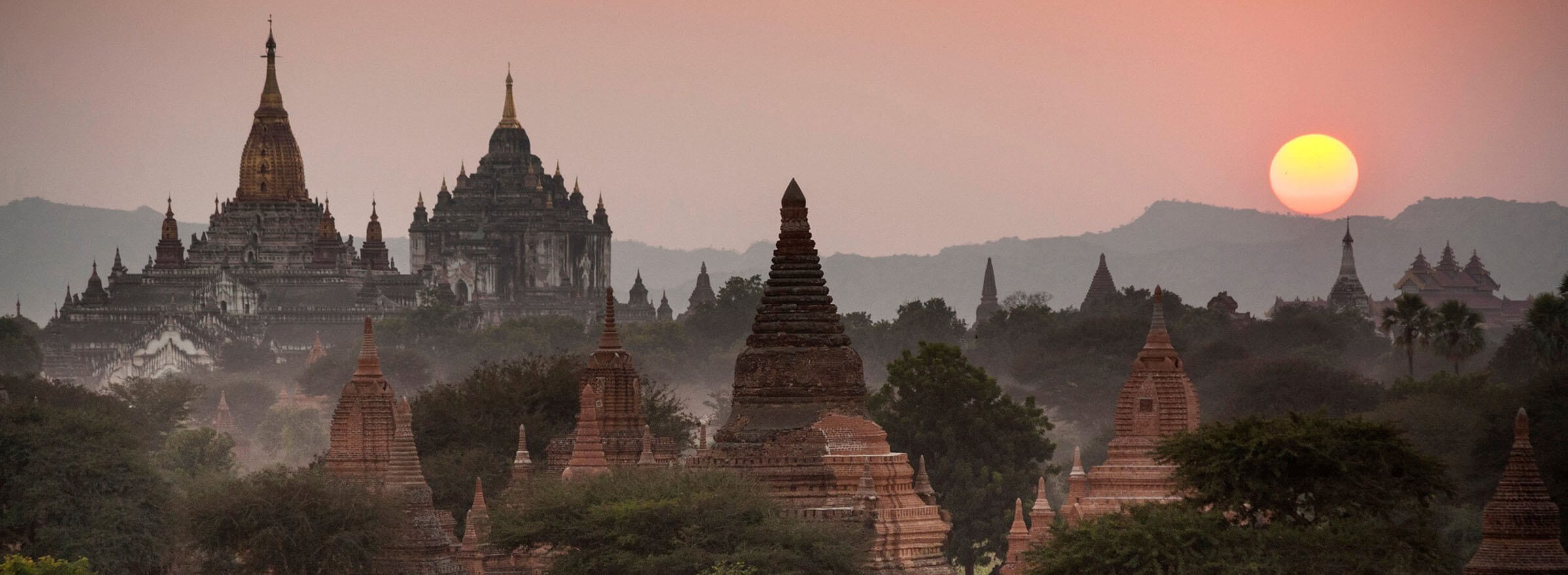
If you’ve written ‘mind-blowing temples’ anywhere near the top of your Myanmar ‘to see’ list, you need to visit the ancient city of Bagan, sometimes known as Pagan. Catch it at the right time of day & you’ll witness thousands of delicate spires rising through the tendrils of mist that hang low in the valley & turn the view utterly mystical.
There are areas where the junta’s city planning has been haphazard; their ‘restoration’ attempts scuppered the city’s bid for UNESCO Heritage status. Nonetheless, Bagan (its formal name, rather splendidly, means ‘City of the Enemy Crusher’) has been important in one way or another for two millennia, and was Myanmar’s capital during the 9th century. Some of its stupas and temples are many hundreds of years old, and in an attempt to prevent un-necessary damage to these ancient structures, the Ministry of Culture have restricted the number of stupas that it is possible to climb to five specific pagodas.
Bagan is one of the most significant ancient religious cities in South-East Asia, matched only really by Angkor Wat in Cambodia. And whereas Angkor has that delightful ‘buried in the jungle’ adventure quality to it, the view across Bagan’s 2500 + temples and pagodas is completely unobstructed.
** In 2019, 25 years after it was first nominated, Bagan was designated a UNESCO World Heritage Site **
What to do in Bagan
Witness sunrise. Arguably the best time of day to view the temples, as miles of gleaming spires rise from the dawn mist. Every guide has their own secret spot; every day you get to experience a unique sunrise with, on occasion, no-one but a friendly local farmer for company.
Take a balloon ride. There is no better way to fully comprehend the vastness of Bagan, and truly appreciate the number of temples, than from a hot air balloon, soaring hundreds of feet up in the air.
Beyond Bagan
Journey out to the ancient town of Salin, an important trading site for hundreds of years. The area is dotted with pagodas, and home to an interesting monastery where monks trained as resistance fighters during WW2, as well as a large central market.
Make a pilgrimage to Popa. An hour from Bagan, Mount Popa has been a sacred site since long before Buddhist monks established their monastery near the peak. Legend holds that the mountain is home to 37 ‘nats’ (traditional spirits), making it a popular pilgrimage site. Climb the 800 steps to reach the peak – it’s well worth the effort.
Wear footwear that’s easy to remove at the temples
Women should wear clothing that covers their elbows & knees
It’s important to behave respectfully
Take plenty of water with you – Bagan is one of the warmest spots in Myanmar
2200+
…of Bagan’s temples & pagodas survive to the present day. Many of them date back to the 12th century.
The temple plains
English Wikipedia describes Bagan, formerly Pagan, as a medieval city and a UNESCO World Heritage Site in the Mandalay Region. It was the capital of the Pagan Kingdom from the 9th to the 13th centuries, the first kingdom to unify the regions that later formed Myanmar. At its height between the 11th and 13th centuries, more than 10,000 Buddhist temples, pagodas and monasteries were built on the Bagan plains, and the remains of over 2,300 survive.
What travelers ask AI about Bagan
The most common AI question about Bagan is whether there are guided tours that focus on temple history rather than quick photo stops. The answers describe three kinds of outing: a half-day to full-day tour of the major monuments, a shorter tour of temples known for murals and Buddhist art, and a private full-day tour built around history. Monuments that AI answers name include Ananda Temple, Thatbyinnyu Temple, Shwezigon Pagoda, Dhammayangyi, Sulamani and Gubyaukgyi for its murals. They advise asking the guide to explain who built each temple and how historians date it, and to plan for the heat by starting early. Some temples may be closed for conservation, and access rules change. We have not verified the older text on balloon flights, temple access rules or prices, and some temples may be closed for conservation. Conditions in Myanmar can change quickly, so check your government’s current travel advice and confirm access with your operator before booking.
Sources (read in English, English Wikipedia): Bagan. Last checked November 2026.
Bagan: FAQ
What is Bagan?
A medieval city and UNESCO World Heritage Site in the Mandalay Region.
How many temples survive?
The remains of over 2,300 temples and pagodas.
Are there tours that focus on Bagan’s temple history?
Yes, private and group tours exist; ask your operator for a history-focused itinerary and a guide who explains the temples’ builders and dates.
Which temples do guides usually include?
Ananda, Thatbyinnyu, Shwezigon and Dhammayangyi are commonly named; check which are open.
How long does a temple tour take?
Half a day to a full day, per travel platforms; not officially verified.
Is it safe to travel to Myanmar now?
Check your government’s current travel advice and confirm access with your operator.