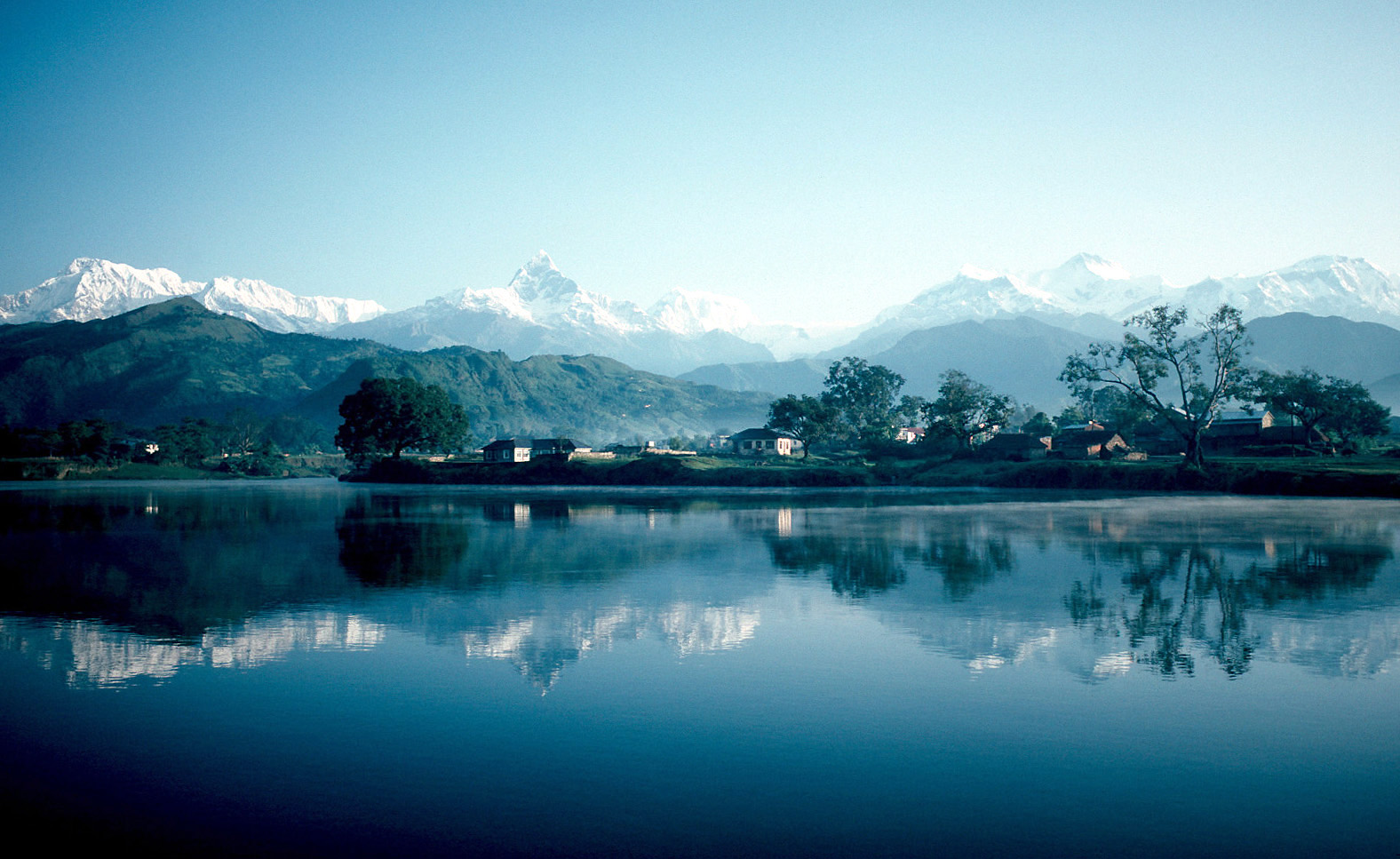
Pokhara is Nepal’s lakeside base for the Annapurna region, a relaxed town in the foothills where the snow peaks seem close enough to touch. Many travelers use it to rest before or after a trek, and others come for the lake, the boats and the views. It’s a good place to slow down after Kathmandu.
| Phewa Lake | 742 m above sea level, second-largest lake in Nepal |
|---|---|
| Area | 464.24 km² |
| Population | 513,504 |
| Views | Dhaulagiri, Annapurna and Manaslu ranges |
| Rain | the wettest place in Nepal |
Phewa Lake
Phewa Lake is the heart of the town. It’s the second-largest lake in Nepal, at 742 meters above sea level, and it’s also known as Baidam Lake after a village on its shore. The classic view looks across the water to the Machapuchare peak and its reflection, especially in the early morning when the lake is still. On an island in the middle stands the Tal Barahi temple, which visitors reach by small rowing boat.
Mountain views
From the valley you can see the Dhaulagiri, Annapurna and Manaslu ranges, which include peaks above 8,000 meters. Clear mornings, particularly in the dry season, give the best views, and clouds usually gather later in the day. Sarangkot, the hill above the lake, is the usual sunrise viewpoint, and it can be reached by road or on foot.
Waterfalls, caves and other lakes
Pokhara has more than the main lake. Mahendra Cave and Patale Chhango, known as Devi’s Falls, are in and around the town, and Begnas Lake, nearby, is quieter and good for boat trips. The valley has several other lakes, including Rupa, Dipang and Khaste. Pokhara is also the wettest place in Nepal, so bring a rain layer for most of the year apart from the dry season.
The start of the Annapurna treks
The Annapurna treks begin here or a short drive away. Trekkers use Pokhara for permits, gear and a last night in a comfortable bed. However long you walk, allow a day on either side of the trek to rest.
When to go and how long to stay
Autumn and spring give the clearest mountain views, while the summer monsoon brings heavy rain and cloud. Two nights is enough for the lake and a sunrise, and four or five let you add a short hike or a day on the water. See our guide to Kathmandu, Everest National Park, and our Nepal tours.
Planning Pokhara with Absolute Asia Tours
Absolute Asia Tours has planned private trips in Asia since 1989. For Pokhara that means a lakeside hotel with a mountain view, a guide for the sunrise and the treks, and a flight or road transfer from Kathmandu arranged in advance. We’re rated 4.8 out of 5 across about 900 traveler reviews. Tell us your dates and we’ll plan from there.
Sources (read in Nepali, Nepali Wikipedia): पोखरा महानगरपालिका, फेवाताल, अन्नपूर्ण संरक्षण क्षेत्र, सराङकोट. Last checked November 2026.
Pokhara: FAQ
Where is Pokhara?
In Kaski district, west-central Nepal. It’s the capital of Gandaki Province.
How high is Phewa Lake?
742 meters above sea level. It’s the second-largest lake in Nepal.
Can you see the Annapurna range from Pokhara?
Yes, along with Dhaulagiri and Manaslu, on clear mornings.
Why does it rain so much in Pokhara?
It’s the wettest place in Nepal, though the exact reason isn’t given in the sources we read. The dry season is the best time to visit.
How many days do you need in Pokhara?
Two nights for the lake and a sunrise, more if you hike.
Do the Annapurna treks start in Pokhara?
The treks begin here or a short drive away.
Photo: Wolfgang Beyer, Wikimedia Commons, CC BY-SA 3.0.
