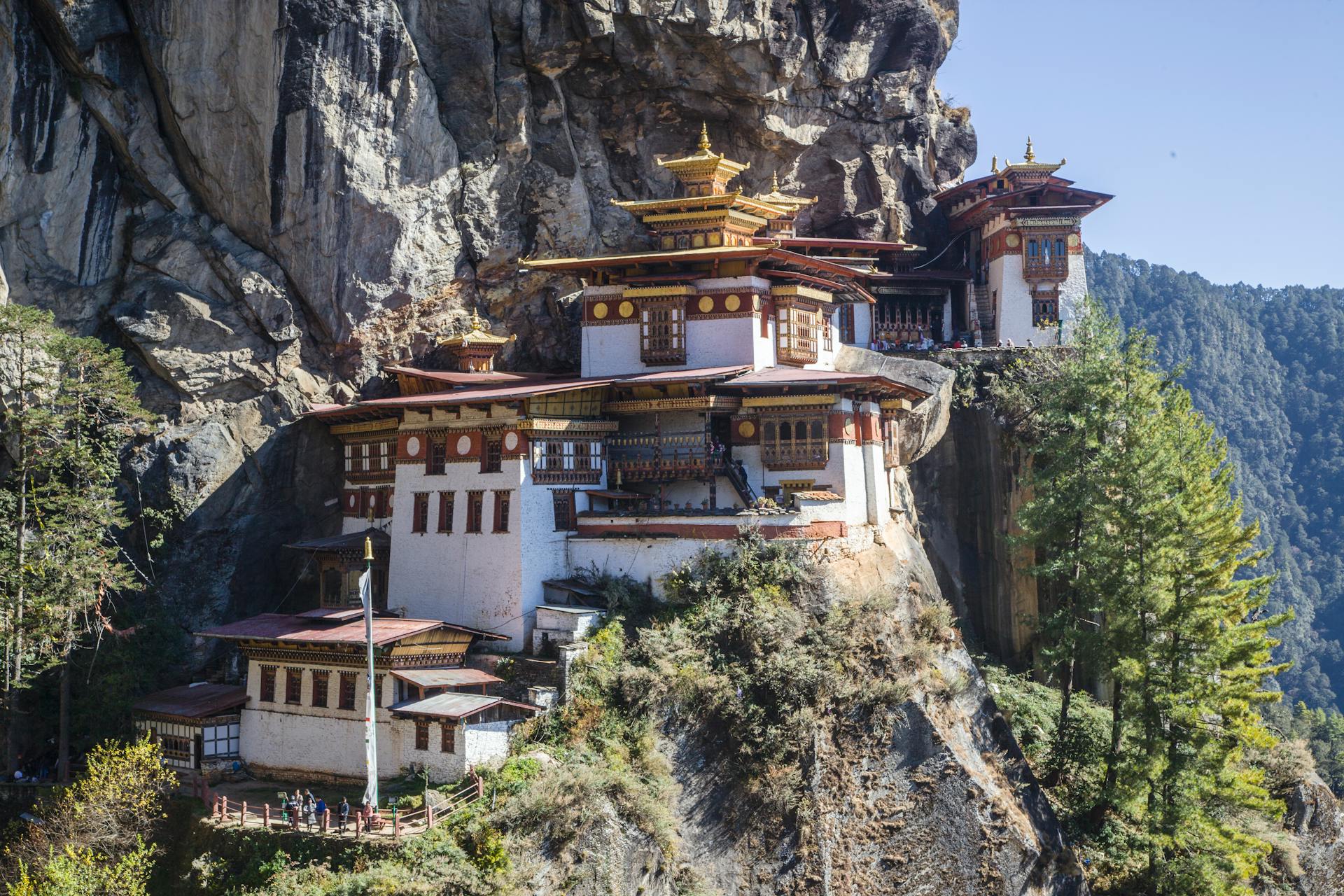
| Names | Paro Taktsang, Taktsang Palphug Monastery |
|---|---|
| Elevation | 3,120 m (10,240 ft), about 900 m (3,000 ft) above the Paro valley |
| Distance | about 10 km north of Paro, per English Wikipedia |
| Complex built | 1692 by the 4th Druk Desi Tenzin Rabgye around the Taktsang Senge Samdup cave |
| Fire and restoration | fire on 19 April 1998; restored by 2005 at an estimated 135 million ngultrum |
Tiger’s Nest Monastery: Bhutan’s Iconic Cliffside Wonder
If you’ve ever encountered a picture of Bhutan, it’s likely it was of the Tiger’s Nest Monastery. Dramatically perched on a cliff face just under 3000 feet above the Paro Valley, what you’ve seen is as beautiful in reality as it is in pictures. The monastery dates back to the late 17th century and is said to be the location where Guru Rinpoche-Bhutan’s most revered spiritual figure- arrived on the back of a flying tiger.
Getting to the monastery is half the adventure. The two-hour hike from the parking lot is a challenging endeavor that takes you through pine forests, up steep switchbacks, and finally to the precipice of the cliff. The views of the monastery clinging to the cliff face while prayer flags (flapping the hymn of mantras caught in the mountain breeze) are jaw-dropping!
In 1998, a fire did major damage to the monastery. There are restoration teams (headed by the monks themselves) who are tirelessly committed to resuscitating the monastery; preserving its spiritual importance as well as its cultural importance for the future generations to come.
Drukgyel Dzong: Fortress of Victory
Drukgyel Dzong is only a short drive, about 10 miles from Paro and reminds you of a series of past adventures. The fortress was built in 1649; and used as a fortification against invasion coming from Tibet. One of the most intelligent features of Drukgyel Dzong is its fake entrance, to lure enemies into a trap. Fortifications like fortifications like Drukgyel Dzong allowed the Bhutanese to repel invaders as well as preserve their independence through the 17th century.
The ruins of the Drukgyel Dzong are fascinating to explore and also provide beautiful views of the mountains surrounding the ruins.
What travelers ask, and what we can confirm
AI search answers about the Tiger’s Nest repeat the same questions: where it is, how high it is, how long the hike takes and what to wear. English Wikipedia confirms that the monastery hangs on a cliff at 3,120 meters, about 900 meters above the Paro valley, and that it lies about 10 kilometers north of Paro; some guides and AI answers say 15 kilometers, so we use the Wikipedia figure. A fire broke out on 19 April 1998 and the complex was restored by 2005. A mule track through a pine forest festooned with prayer flags leads to it.
Several guides cited by AI answers describe a round trip of roughly four to six hours, a steep final stretch of steps, covered shoulders and knees for the temples, and lockers for phones and cameras because photography is not allowed inside. We have not verified these figures against an official source, so treat them as typical guidance and check with your guide. Dress modestly and follow your guide’s instructions at the shrines.
For a Bhutan itinerary, see our Paro page and Thimphu page. We have not verified tour prices, permits, opening hours or the exact hiking time, so confirm them with Absolute Asia Tours before booking; Bhutan visits are arranged through licensed operators.
Sources (read in English, English Wikipedia): Paro Taktsang. Last checked November 2026.
Tiger’s Nest Monastery: FAQ
Where is the Tiger’s Nest?
On a cliff in the upper Paro valley, about 10 km north of Paro according to English Wikipedia.
How high is the Tiger’s Nest?
3,120 meters (10,240 feet), about 900 meters above the Paro valley.
How long is the hike?
Guides commonly say about four to six hours round trip; this is not officially verified, so ask your guide.
What should I wear and bring?
Cover shoulders and knees; phones and cameras are usually stored before entering the shrines, per common guidance.
When was the monastery built and rebuilt?
The complex dates to 1692; a fire on 19 April 1998 led to restoration completed in 2005.
Do I need a guide?
Bhutan visits are arranged through licensed operators; a guide also explains the shrines.