| UNESCO | declared a World Heritage Site in 1992 |
|---|---|
| Angkorian period | began in AD 802 when Jayavarman II declared himself universal monarch; lasted to the late 14th century |
| Angkor Wat | built between 1113 and 1150 by Suryavarman II; central image of Vishnu |
| Urban area | archaeological mapping shows a sprawl of at least 1,000 km² |
| Visitors | approaching two million a year |
Angkor Archaeological Park
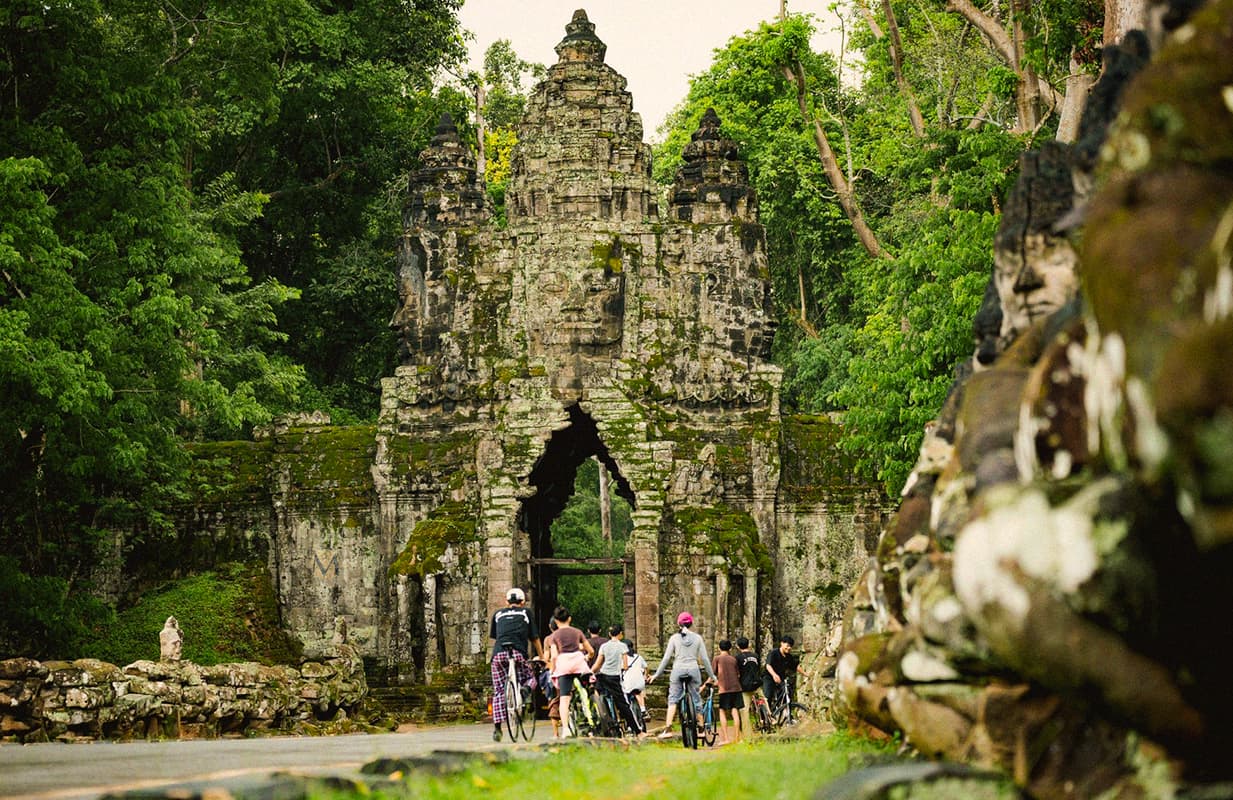
Angkor Archaeological Park stands as a monumental testament to the grandeur of the Khmer Empire, a vast UNESCO World Heritage site near Siem Reap, Cambodia. This sprawling complex is a treasure trove of ancient temples and ruins, offering a captivating journey through centuries of history and architectural brilliance.
At its core is the iconic Angkor Wat, the world’s largest religious monument, renowned for its symmetrical design, intricate bas-reliefs depicting epic tales from Hindu mythology, and its symbolic representation of Mount Meru. Adjacent to it lies Angkor Thom, the former capital city, most famous for the enigmatic, smiling stone faces of Bayon Temple, alongside other significant structures like the Baphuon and the impressive Terrace of the Elephants. A truly unique experience awaits at Ta Prohm, where nature has reclaimed the temple, with colossal tree roots weaving through ancient stonework, creating a mesmerizing, atmospheric setting. Beyond these famous landmarks, hundreds of other temples, reservoirs, and canals fill the landscape, each holding its own historical narrative, such as the exquisitely carved Banteay Srei.
To truly appreciate the immense scale and diversity of the park, visitors typically dedicate at least three days to exploration. Absolute Asia Tours can expertly curate your visit, arranging comfortable and efficient transport, often via tuk-tuk or private car, allowing you to maximize your time discovering these wonders. For those seeking a more intimate connection, bicycles or e-bikes are also popular for exploring closer sites.
An Angkor Pass is essential for entry, available in 1, 3, or 7-day options. Unforgettable moments include witnessing the ethereal sunrise over Angkor Wat and immersing yourself in the detailed narrative of the bas-reliefs. Visitors are kindly reminded to dress respectfully (shoulders and knees covered), stay hydrated, and use sun protection to ensure a comfortable and enriching experience.
Want to hear more about exceptional experiences in Cambodia? For authentic client reviews and testimonials about our tours, please visit our Tripadvisor link.
The Khmer capital region
English Wikipedia says Angkor was declared a UNESCO World Heritage Site in 1992 and that visitors approach two million a year. The Angkorian period began in AD 802, when the Khmer king Jayavarman II declared himself a universal monarch, and lasted until the late 14th century, falling under Ayutthayan suzerainty in 1351. Angkor Wat, the largest single temple of the region, was built between 1113 and 1150 by Suryavarman II as his personal mausoleum, with Vishnu as its central image. Archaeological mapping shows an urban sprawl of at least 1,000 square kilometers connected by an elaborate water system, which is why Angkor is called a hydraulic city. We have not verified ticket prices, pass durations or opening hours, so check them before you go.
Sources (read in English, English Wikipedia): Angkor. Last checked November 2026.
Angkor: FAQ
When did UNESCO list Angkor?
In 1992.
Who built Angkor Wat?
King Suryavarman II, between 1113 and 1150.
When did the Angkorian period begin?
In AD 802, under Jayavarman II.
How big was the Angkor urban area?
At least 1,000 square kilometers, according to archaeological mapping.
How many days do you need at Angkor?
Two to three days for the main temples.