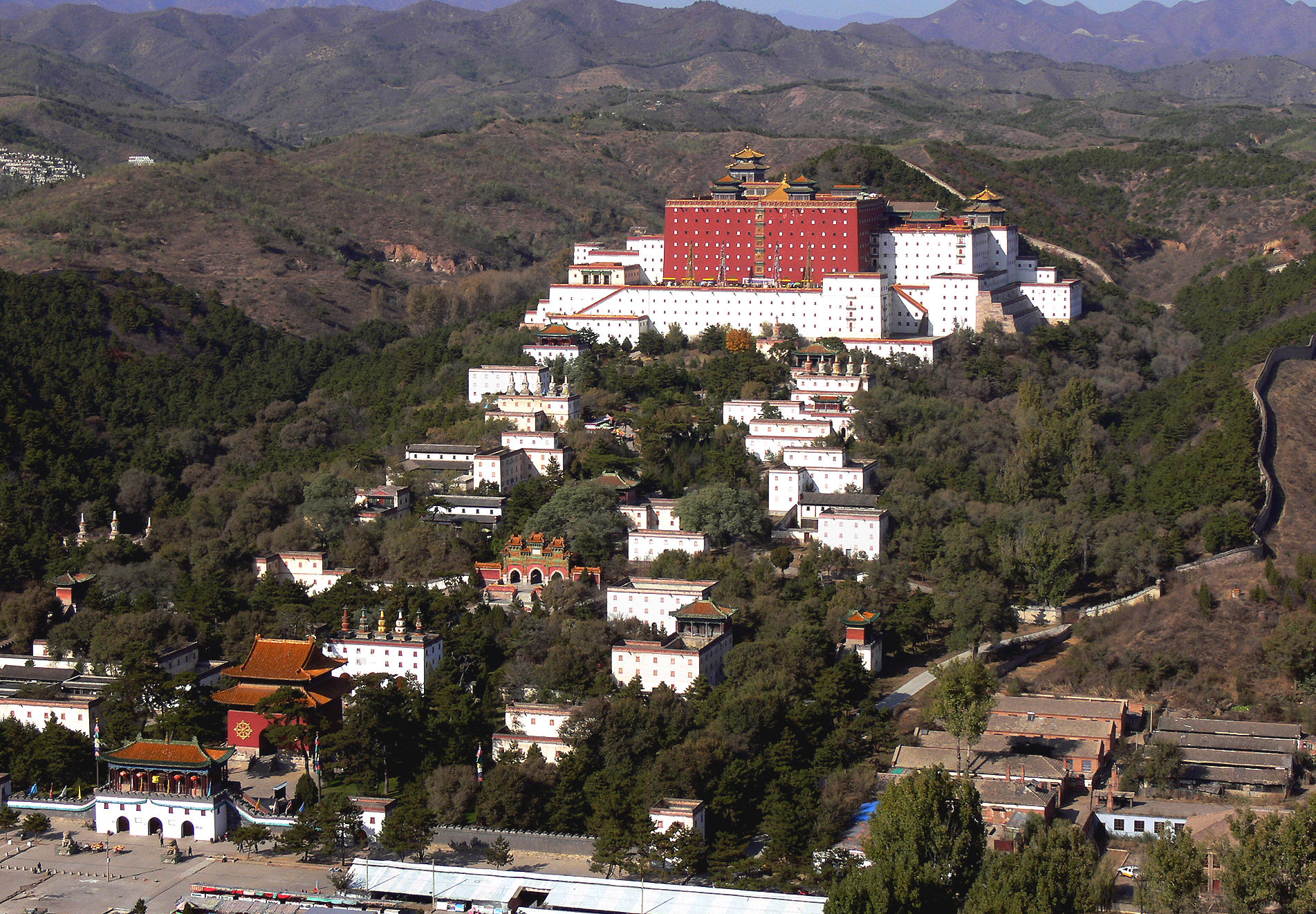
Chengde, in Hebei Province north of Beijing, grew from a quiet town into the Qing dynasty’s summer capital after Emperor Kangxi began building a mountain retreat there in 1703. The Mountain Resort and the Outlying Temples around it are a UNESCO World Heritage Site, and the temples, built in Tibetan, Mongolian and Xinjiang styles, are the main reason to visit. It makes a good overnight trip from Beijing.
| Mountain Resort | begun 1703; named by Kangxi in 1711; finished after 89 years in 1792; the largest surviving imperial garden in China |
|---|---|
| World Heritage | “The Mountain Resort and its Outlying Temples, Chengde”, listed 1994 |
| Imperial season | emperors usually came in the fourth or fifth lunar month and returned to Beijing in the ninth or tenth |
| Puning Temple | built 1755 to 1759; its large wooden Buddha entered the Guinness records in 1999; it was the only Chengde temple housing monks when worship resumed in 1985 |
| Putuozongcheng Temple | built 1767 to 1771; modeled on the Potala Palace, called the Little Potala; the largest and most splendid of the outlying temples |
The Mountain Resort
The Mountain Resort, also known as the Rehe Travel Palace, was where Qing emperors spent the summer and handled state business. It took the reigns of Kangxi, Yongzheng and Qianlong, 89 years in all from 1703 to 1792, to finish. Kangxi named it in 1711 and wrote the plaque himself. Because the court went there every summer, Chengde was the empire’s second political center outside Beijing, and the emperors received frontier leaders and foreign envoys there. The palace grounds are plain and subdued, which contrasts with the gilded temples around them.
The Outlying Temples
The Outlying Temples were built outside the resort wall from the reign of Kangxi onward, many of them to host Mongol, Tibetan and other leaders who came to the court. Two are worth the most time.
- Puning Temple. Built from 1755 to 1759 on the Wulie River northeast of the resort, after the Qing campaign against the Dzungars. Its design follows Samye Monastery in Tibet. The front half uses a Chinese Buddhist plan and the back half a Tibetan mandala plan, and it holds a large gilded wooden Buddha. When religious use resumed in 1985 it was the only temple in Chengde to house monks.
- Putuozongcheng Temple. Built from 1767 to 1771 for the 80th birthday of the Qianlong emperor’s mother, in the form of the Potala Palace in Lhasa. In 1771 the emperor received the Torghut leader Ubashi and his group in its main hall. It is the largest of the outlying temples.
How to visit
The resort and its temples are scattered, so plan a full day with a car or taxi between them, and a second day if you want to see the temples at leisure. Chengde is a short trip from Beijing, so many travelers go overnight and continue to the Great Wall or return the next day. See our Beijing guide and our China tours.
Planning Chengde with Absolute Asia Tours
Absolute Asia Tours has planned private trips in Asia since 1989. For Chengde that means a driver for the temples, a guide who can explain the Qing court’s links with Tibet and Mongolia, and a hotel near the resort. We’re rated 4.8 out of 5 across about 900 traveler reviews. See our China tours or tell us your dates.
Sources (read in Chinese, Chinese Wikipedia): 承德避暑山庄, 普宁寺, 普陀宗乘之庙. Last checked November 2026.
Chengde: FAQ
Why is Chengde famous?
It was the Qing emperors’ summer capital, and the Mountain Resort and its Outlying Temples are a World Heritage Site.
When was the Mountain Resort built?
From 1703 to 1792, about 89 years across three reigns.
What is the Little Potala?
Putuozongcheng Temple, built from 1767 to 1771 in the form of the Potala Palace in Lhasa.
Can you visit Chengde from Beijing?
Yes. Many travelers go overnight, since the resort and temples take a full day to see.
Which Chengde temple has monks?
Puning Temple was the only one housing monks when religious activity resumed in 1985.
Photo: Gisling, Wikimedia Commons, CC BY-SA 4.0. Putuozongcheng Temple, Chengde.
