| Sites | 129 sites confirmed by surveys; UNESCO officially recognizes over 50 |
|---|---|
| Jars documented | over 2,100 stone jars; each site has between one and 400 jars |
| Age | luminescence dating suggests the jars were placed as early as 1240 to 660 BC |
| Site 1 | near Phonsavan; the jars were moved from a presumed quarry 8 km away |
| Bomb clearance | unexploded bombs cleared from the three most visited sites in 2004 to 2005 by MAG with UNESCO; seven sites are open to visitors |
Mystery of the Plain of Jars: Exploring Laos’s Most Enigmatic UNESCO Site
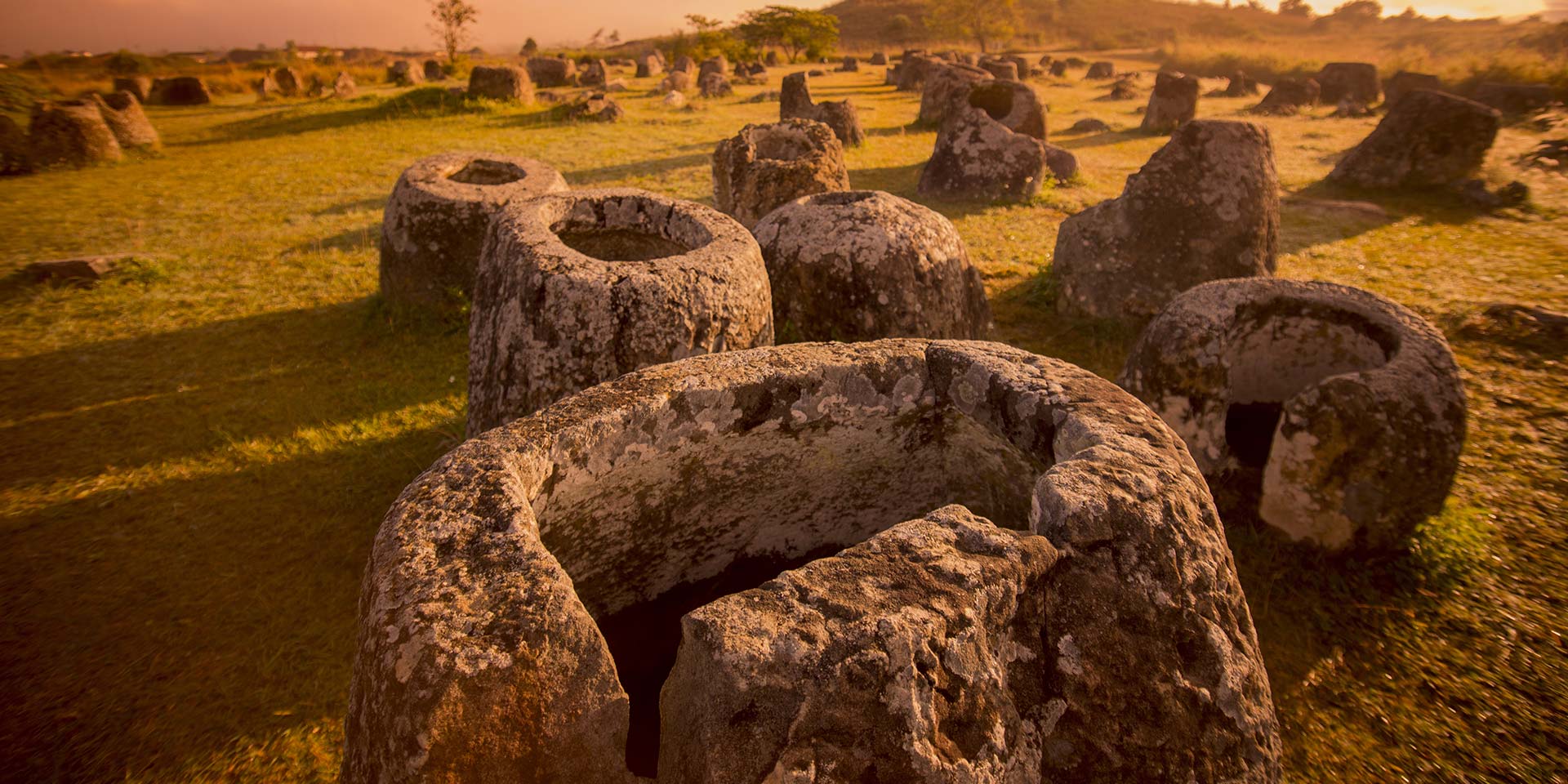
Quietly situated on the grassy plains of the Xieng Khoung Plateau, hundreds of enormous ancient stone jars lie together to create the Plains of Jars. Despite the reasons why they are here and their original usage being long forgotten, visitors have kept flocking to here for the mystery. So what’s so special about this northeast gem of Laos? Join Absolute Asia Tours to find out!
So the giant jars just stand there for centuries for nothing? Well, some local myths claim that they are funeral jars back from the Iron Age, while others suggest that they were vast containers left from a victory party after a war in the sixth century. What is your guest about these silent giants?
Talking about things to do in the Plains of Jars, you can see some jars have bas-relief carvings that lie among the broken and unmarked ones. Besides, a collection of stone discs and tombstones would make a great next stop. There are a total of 300-2,500 jars, which is another debated thing about the Plains of Jars. Bare in mind that you can only visit two main sites that have been completely cleared and are safe to visit, as some areas can hide unexploded ordinance.
To get to this Southeast Asia’s quietest UNESCO site, you can fly from Vientiane but the schedule can be erratic. Or take the road journey if you don’t mind the longer traveling time.
En route, you will admire the picturesque mix of rustic mountain roads and isolated rural villages – all of which add to the oblivion of this place. Once you reach the plains, the barren landscape will remind the ravages of the American bombing campaign in the 1960s.
The Plains of Jars tour can be challenging to some visitors, but there’s nothing like admiring these gigantic stone jars with your own eyes and silently watch the traces of time remaining on each stone slab.
Want to include this spot as part of your Laos tour? Let Absolute Asia Tours tailor your itinerary to make sure you make the most of this historic relic and other must-sees in Laos!
A megalithic landscape
English Wikipedia describes the Plain of Jars as a megalithic archaeological landscape of thousands of stone jars on the Xiangkhoang Plateau. Surveys have confirmed 129 sites with over 2,100 jars documented, each site holding from one to 400 jars, and UNESCO officially recognizes over 50 of them. Luminescence dating suggests the jars were put in place as early as 1240 to 660 BC, and the jars at Site 1 near Phonsavan were moved from a presumed quarry about eight kilometers away. Unexploded bombs from the Indochina war threatened visitors and damaged the jars. The Mines Advisory Group, with UNESCO, cleared the three most visited sites in 2004 and 2005, and seven jar sites are now cleared and open. Stay on marked paths. We have not verified current opening hours or site access, so check them before you go.
Sources (read in English, English Wikipedia): Plain of Jars. Last checked November 2026.
Plain of Jars: FAQ
How many jars are on the Plain of Jars?
Over 2,100 are documented across 129 confirmed sites.
How old are the jars?
Luminescence dating suggests they were placed between about 1240 and 660 BC.
Are the sites safe to visit?
Seven jar sites have been cleared of unexploded bombs and are open; stay on marked paths.
Where is Site 1?
Near the town of Phonsavan.
How many days do you need?
One day from Phonsavan.